
2 Days in Bangkok: The Almost Perfect Itinerary


Bangkok is one of the most exciting cities on earth. It’s a city of eight million people that somehow manages to feel intimate once you’ve learned its rhythms: the alley where the incense smoke hangs low in the morning, the noodle stall that remembers your order (OK, this doesn’t happen), the ferry crossing that catches golden light just right. On a first visit, Bangkok overwhelms. On a return, it reveals. The scale never shrinks — the skyline still bristles, the traffic still roars — but tucked inside the immensity are neighborhoods that feel secret, temples that hum quietly behind market chaos, and river moments that feel entirely your own. These two Almost Perfect days aren’t about seeing everything. They’re about balancing spectacle with stillness, street food with sacred spaces — and discovering how a city this vast can feel both exhilarating and entirely your own.

Day 1: Temples, Markets & Chinatown After Dark
Bangkok does not wake up gently. It yawns in incense smoke and engine noise, in the hiss of oil and the slap of river against concrete piers. Day One is a long, glorious wander — hours and hours of walking before you even realize you’ve done it — through old trading lanes, gold-roofed temples, flower markets, and the river that birthed the city.
Charoen Krung 32 Street Art >>> Talat Noi >>> Wat Trai Mit Witthayaram Worawihan >>> Chinatown >>> Nai Ek Roll Noodle >>> Nai Mong Fry Oyster >>> Sampheng Market >>> Wat Chakrawatrachawat Woramahawihan >>> Pak Khlong Talat Flower Market >>> Wat Pho Pier / Wat Pho >>> Khao San Road >>> Rambuttri Alley >>> Teens of Thailand >>> Messenger Service >>> G.O.D. Bar (Chinatown) >>> Goldsmith Bar >>> Tropic City >>> Mahaniyom Cocktail Bar >>> Charmgang

Charoen Krung 32: Street Art in the Old Trading Quarter
Bangkok’s oldest paved road now doubles as its most photogenic open-air gallery. The side streets around Charoen Krung 32 are layered with massive murals — hyperreal faces, political pop art, abstract color fields splashed across century-old shophouses. This was once the spine of foreign trade. Today, it’s espresso bars, design studios, and creative spaces like Warehouse 30, where old industrial buildings have been reborn as galleries and cafés.
Go early. The light slices cleanly between the buildings, and you’ll have the murals (mostly) to yourself.

Talat Noi: Narrow Alleys & River Grit
Slip off the main road and you’re suddenly in old Bangkok — the kind with rusted engine blocks stacked like sculpture and cats asleep on shrine steps. Talat Noi is all tight alleys and ancestral homes, Chinese shrines, and machine shops that look unchanged since 1953. You’ll wander without meaning to. That’s the point. If you hear the river, you’re headed in the right direction.

Wat Trai Mit: Temple of the Golden Buddha
Hidden for centuries beneath plaster, the world’s largest solid gold Buddha sits gleaming inside Wat Trai Mit Witthayaram Worawihan. Five and a half tons of gold. Zero subtlety. Arrive mid-morning when the light turns the statue molten.
What makes Wat Traimit extraordinary is not just its size or the intrinsic value of the gold, but its remarkable history: the statue was hidden under layers of plaster for centuries, protecting it from theft and war, only to be rediscovered in the 1950s.
Visiting Wat Traimit offers a rare glimpse into Thailand’s devotion, artistry, and ingenuity. The temple itself is beautifully maintained, with serene courtyards and decorative murals, but the Golden Buddha remains the central draw — a symbol of faith, endurance, and the hidden treasures of Thai history. For travelers, it’s a moment to pause amid the bustle of Chinatown and witness a piece of Bangkok that is both ancient and almost miraculous in its preservation.

Chinatown: Gold, Steam & Controlled Chaos
Bangkok’s Chinatown is not subtle. It is loud, fragrant, delicious, and entirely overwhelming — in the best possible way. This is one of the oldest, busiest, and most atmospheric neighborhoods in the city — a place where Bangkok’s history, food culture, and street life collide in a way that feels almost cinematic. Founded in the late 18th century when Chinese merchants settled along the Chao Phraya River, the district grew into a dense maze of gold shops, shrines, markets, and food stalls centered around Yaowarat Road.
By day, traders move through narrow market alleys like Sampheng Lane, selling everything from fabrics to electronics. By night, Yaowarat transforms into one of the greatest street-food destinations on earth — woks roaring, seafood grilling, and neon signs reflecting off polished metal carts. In between the chaos you’ll find centuries-old temples like Wat Trai Mit Witthayaram Worawihan, tiny shrines wedged into alleyways, and a new generation of creative cocktail bars hidden inside restored shophouses.
The result is a neighborhood that feels both ancient and wildly alive — a place where a 200-year-old shrine might sit next to a Michelin-listed noodle stall or one of Asia’s best cocktail bars. For many visitors, Chinatown isn’t just a stop in Bangkok — it’s the city at its most vibrant.
Nai Ek Roll Noodle
The Michelin Bib Gourmand sign isn’t subtle, but the noodles are the star. At Nai Ek Roll Noodle, silky rice rolls slide into rich broth with pork and crisped garlic. Order what the table next to you orders. It will be right.
Nai Mong Fry Oyster
At Nai Mong Fry Oyster, you order one thing: hoi tod. An oyster omelet that crackles at the edges, soft in the center, hit with chili sauce and lime. It’s messy. It’s perfect. Stand, eat, move on.

Sampheng Lane: Market Energy
The veins of Chinatown run through Sampheng Lane, a narrow, bustling alley that feels like the city’s pulse made visible. Here, stacks of fabric reach toward the sky, bins of beads glint in every color imaginable, and plastic toys spill from carts that surge forward like tiny rivers of motion. Street vendors call out their wares in a rapid-fire rhythm, bicycle carts weave unpredictably through the crowd, and the aroma of dried spices, incense, and street food hangs in the air. You will get jostled — probably several times — but it’s all part of the experience. Smile, lean into the chaos, and let yourself be swept along: in Sampheng Lane, the frantic energy, history, and resilience of Chinatown are on full display, and every step feels like stepping into a living, breathing market that has existed for centuries.
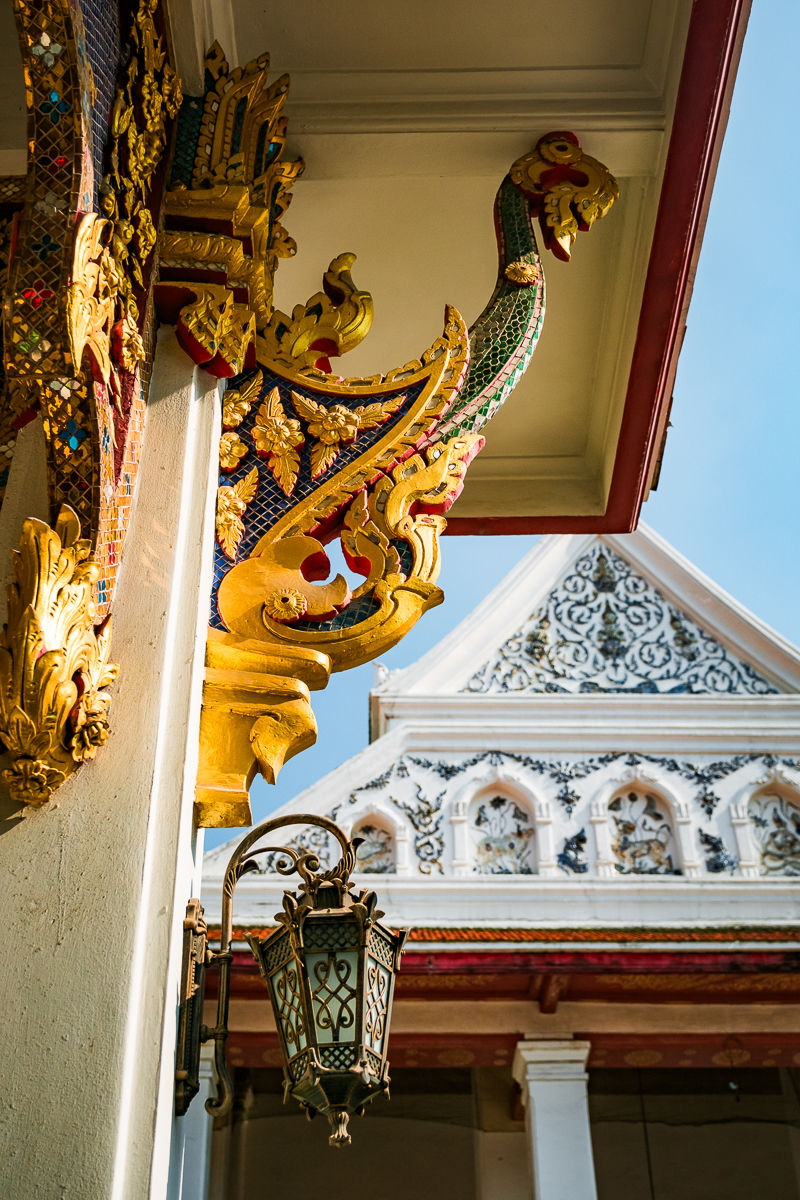
Wat Chakrawatrachawat:
The Crocodile Temple
Yes, there are crocodiles. At Wat Chakrawatrachawat Woramahawihan, the temple’s unusual pond once served as a natural safeguard: monks kept live crocodiles to deter thieves and protect the temple’s treasures. Today, the crocodiles are less fearsome guardians and more sleepy locals, basking lazily in the sun or drifting through the water with an almost serene indifference. Visiting the temple is a reminder of how Bangkok’s neighborhoods blend the sacred, the practical, and the unexpected — and how even the most unusual traditions become part of daily life. It’s strange, slightly whimsical, and entirely authentic, giving travelers a glimpse of the city’s wonderfully local, offbeat character.
Spoiler alert: I did not find the crocodiles. I was in a rush to get to the next market!

Pak Khlong Talat: Flower Market
Bangkok smells like jasmine here. Pak Khlong Talat is a riot of color and fragrance, where mountains of marigolds, orchids, and delicately folded lotus buds spill from crates and baskets, each destined for temple offerings, street shrines, or local celebrations. The market hums with constant motion: vendors calling out their wares, buyers negotiating in rapid-fire Thai, and delivery trucks weaving through the narrow lanes stacked high with blooms. Though it operates nearly 24 hours a day, the market reaches its most magical glow in the late afternoon, when the golden light catches petals, lanterns, and the bustling energy of the crowd. Walking through Pak Khlong Talat is more than a shopping trip — it’s a sensory immersion, a fragrant, chaotic, and utterly enchanting glimpse of Bangkok’s devotion to color, beauty, and ritual.

Wat Pho Pier & Wat Pho: Reclining Buddha
By now, you’ve likely walked nearly two hours through Bangkok’s streets, markets, and alleys, and it’s time for a reward that feels both monumental and meditative. At Wat Pho, you’ll find one of the city’s most iconic sights: the 46-meter-long Reclining Buddha, draped in gold leaf and stretching across the main hall with effortless grace. Every detail is exquisite — the mother-of-pearl inlays on the soles of the Buddha’s feet, the serene expression on his face, and the intricate murals that surround him all invite quiet contemplation. The sheer scale of the statue is awe-inspiring, yet it radiates an almost tangible sense of calm, making it a perfect pause in the middle of a busy day. Visiting Wat Pho is more than sightseeing; it’s an immersion into Thailand’s spiritual artistry, history, and the kind of serenity that can only be found in spaces steeped in centuries of devotion.

Khao San Road
Few streets in the world are as famous among travelers as Khao San Road.
For decades this short strip has been the unofficial capital of the backpacker world. Bars blast music. Street vendors fry noodles and scorpions. Tattoo parlors, travel agents, and cheap guesthouses line the block.
Is it chaotic? Absolutely. Is it a cultural phenomenon worth seeing at least once? Kinda. Sorta. Sure. Come for the spectacle. But honestly… don’t feel bad about skipping it, either! Personally, I don’t find Khao San Road all that enjoyable (same same for Rambuttri). I think there are far better places to visit in Bangkok, several of which I’ll get to in a moment.

Rambuttri Alley
Just around the corner from Khao San lies its calmer sibling: Soi Rambuttri. Tree-lined and lantern-lit, Rambuttri feels far more relaxed. Sidewalk restaurants spill onto the street, travelers linger over Chang beers, and the atmosphere is almost European café culture — just with Thai street food.
If Khao San is energy, Rambuttri is the exhale. But like I said… you could skip both and do something like:
An Evening in Bangkok: Chinatown Bars & Late-Night Silom
After a full day of temples, markets, and museums, Bangkok begins its nightly transformation. Street carts fire up charcoal grills, neon signs flicker awake, and entire neighborhoods shift into nightlife mode. One of the best areas to begin the evening is Bangkok’s rapidly evolving Chinatown bar district — before possibly heading across the city to Silom for cocktails and dinner.

Chinatown Nightlife: Soi Nana
Not to be confused with the infamous Sukhumvit Nana district, Soi Nana has become one of Bangkok’s coolest micro-neighborhoods. This narrow lane in old Chinatown is packed with inventive cocktail bars tucked inside restored shophouses. The atmosphere is relaxed, slightly gritty, and deeply atmospheric — the perfect place to barhop between a handful of exceptional spots within a few minutes’ walk.

Teens of Thailand: Bangkok’s Gin Shrine
The bar that helped put this alley on the global cocktail map is Teens of Thailand.
Despite the name, it’s not a teenage hangout — it’s one of the city’s pioneering craft cocktail bars, known for inventive gin-based drinks often infused with Thai herbs and botanicals. The space is small, moody, and always buzzing with a mix of locals, expats, and cocktail pilgrims.
If you’re only having one drink in Chinatown, this is a great place to do it.
Messenger Service
A few steps away is Messenger Service, a stylish bar inspired by the vintage courier services that once operated throughout Bangkok.
The space feels like a retro office lounge — leather seating, warm lighting, and beautifully crafted cocktails that often incorporate Southeast Asian ingredients. It’s quieter than some of the neighboring spots, making it a great place to slow down and enjoy a well-made drink.

G.O.D. Bar (Chinatown)
G.O.D.— short for Genius on Drugs — is one of Chinatown’s most inventive cocktail spots. Hidden along Soi Rammaitree, the bar leans into a dark, sacrilegious aesthetic, with a moody interior that feels somewhere between an abandoned chapel and an experimental cocktail lab.
High ceilings, dramatic lighting, and occasional live piano music set the tone, while the bartenders focus on bold, ingredient-driven drinks often paired with thoughtful small bites. The bar has quickly gained international attention, landing at #26 on Asia’s 50 Best Bars list in 2025, and it remains one of the most distinctive places to drink in Bangkok. It also may be the most pretentious bar I’ve ever visited in my life; do with that what you will.
Goldsmith Bar
This stylish bar occupies a beautifully restored shophouse and serves refined cocktails in an elegant setting that still feels distinctly Chinatown. The drinks are thoughtful and beautifully presented — a step up in sophistication without losing the neighborhood’s relaxed vibe.
Late Evening in Silom: Cocktails & Dinner
After exploring Chinatown, you can grab a quick taxi to Silom, one of Bangkok’s best areas for cocktail bars and late dinners.

Tropic City
One of the most celebrated bars in Southeast Asia, Tropic City brings a vibrant tropical energy to Bangkok’s cocktail scene.
The drinks lean rum-heavy with Caribbean inspiration, but the bartenders weave in Southeast Asian ingredients like pandan, coconut, and regional citrus. The space is colorful, lively, and fun — exactly the kind of bar where the night easily stretches longer than planned.

Mahaniyom Cocktail Bar
Next, head to Mahaniyom Cocktail Bar, one of the most acclaimed cocktail bars in the city.
Here the bartenders build drinks around distinctively Thai ingredients — herbs, fruits, spices, and local spirits — transforming them into elegant cocktails that feel deeply connected to Thai cuisine and culture. It’s intimate, sophisticated, and a must for cocktail enthusiasts. This one should be on your can’t-miss bucket list.
Charmgang
Finish the night with dinner at Charmgang, a small but extraordinary restaurant that has become one of Bangkok’s most talked-about kitchens. The focus is intensely flavored Thai curries and regional dishes prepared with incredible care. The food tastes both traditional and elevated — bold spices, deep aromatics, and flavors that linger long after the meal ends.
After a day that began among temples and flower markets, ending the night with great cocktails and unforgettable Thai food feels like the perfect Day 1 finale.

DAY 2: Choose Your Own Adventure
There’s really no way to see all of Bangkok’s major historic sites in one day – without even making mention of the smaller, quirkier side quests that will really shape your adventure. I suggest choosing two out of Wat Pho, Wat Arun, the Grand Palace and Golden Mount. On my most recent trip I went with Wat Pho and the Grand Palace, given their proximity to other sites I wanted to see.
Wat Arun >>> The Grand Palace & Temple of the Emerald Buddha >>> Rusdang >>> Amulet Market >>> National Museum Bangkok >>> The Pig Memorial >>> K. Panich >>> Giant Swing >>> Swing Bar >>> Wat Saket: The Golden Mount >>> Lumphini Park >>> Bar Us >>> Funkytown >>> Gedhawa >>> Burbit Craft Beer >>> The Brew House Sukhumvit >> Bar Sathorn

Wat Arun: Temple of Dawn
A short ferry ride across the Chao Phraya River brings you to Wat Arun, one of Bangkok’s most iconic landmarks. Known for its striking central prang adorned with thousands of porcelain tiles, the temple rises dramatically above the river and offers a quintessential view of the city skyline. Climbing the steep, narrow steps to the upper terraces rewards you with a unique vantage point — looking back across the water, you can take in the sprawl of Bangkok’s rooftops, the glinting temples, and the bustling river below.
Timing makes all the difference: an early morning visit lets you watch the city wake while avoiding crowds, while late afternoon provides a soft, golden light that makes the porcelain mosaics glow like scattered jewels. Beyond its postcard-perfect beauty, Wat Arun is also a place to pause and appreciate Bangkok’s layers of history, devotion, and artistry, all in one breathtaking riverside setting.

The Grand Palace & Temple of the Emerald Buddha
Few places in Southeast Asia match the visual shock of the Grand Palace. For over 150 years this sprawling compound served as the official residence of the kings of Siam. Gold roofs cascade across courtyards. Mosaic towers glint under the sun. Mythical guardians stand watch at every gate.
Inside the palace grounds sits Thailand’s most sacred temple: Wat Phra Kaew. Despite the name, the Emerald Buddha is carved from jade, but its importance is immense. The statue is considered the spiritual protector of the Thai kingdom, and the king himself performs seasonal robe-changing ceremonies for it. Expect crowds, but also expect some of the most elaborate temple architecture anywhere in Asia.

Rusdang: Crispy Pork Noodles
Just steps from the Amulet Market is one of those wonderfully old Bangkok institutions travelers rarely find unless someone points them there: Rusdang.
This modest, decades-old shop specializes in bowls of egg noodles topped with crispy pork belly (moo krob) — golden crackling skin, tender meat, and a savory broth that’s deeply comforting after a long day of temple-hopping. Locals slide in for a quick lunch, slurp their noodles, and head back out into the chaos of the old city.
It’s not fancy. It’s not Instagram-famous.
But it’s exactly the kind of place that makes wandering Bangkok so rewarding — a simple bowl of noodles, done perfectly, in a place that’s been feeding the neighborhood for generations.

Amulet Market
Near the banks of the Chao Phraya River sits one of Bangkok’s most fascinating and quietly intense marketplaces: the Amulet Market. At first glance it looks like a cluster of modest stalls, but step closer and you’ll discover thousands upon thousands of tiny Buddhist amulets displayed in trays and glass cases. Each one carries meaning — believed to offer protection, luck, prosperity, or spiritual strength depending on the monk, temple, or era from which it originates.
Serious collectors and devotees lean over the counters with magnifying glasses, studying fine details in clay, bronze, or stone while debating authenticity and provenance with vendors. Some amulets are humble and inexpensive; others are rare pieces tied to famous monks and command astonishing prices. The atmosphere is part marketplace, part spiritual exchange, where faith, history, and commerce blend in a uniquely Thai way. Even if you’re not in the market for a talisman, wandering through the Amulet Market offers a rare glimpse into a deeply rooted tradition that continues to shape everyday life in Bangkok.

National Museum Bangkok
If you want to truly understand Thailand’s long and layered history, a visit to the Bangkok National Museum is essential. Housed within the grounds of a former royal palace, the museum contains the largest collection of Thai art, artifacts, and historical treasures in the country. Its galleries trace the story of Thailand from prehistoric times through the great kingdoms of Sukhothai and Ayutthaya and into the modern era. Inside, you’ll find everything from ancient stone tools and delicate ceramics to magnificent royal funeral chariots and some of the finest Buddha sculptures ever created, each reflecting the artistic styles of different periods of Thai civilization.
The museum complex itself is beautiful, with traditional Thai architecture and quiet courtyards that feel worlds away from the bustle outside. It’s a vast place, and you could easily spend hours exploring its halls — but even a brief visit provides valuable context for the temples, traditions, and cultural details you’ve encountered throughout the day in Bangkok.

The Pig Memorial
Just when you think Bangkok has shown you everything, you stumble across a bronze pig.
The Pig Memorial was built in 1913 to honor Queen Saovabha Phongsri on her 50th birthday. She happened to be born in the Year of the Pig according to the Chinese zodiac, and her children commissioned the statue in tribute.
It’s small, a little strange, and wonderfully human — the kind of odd historical footnote that makes wandering Bangkok so rewarding.
K. Panich: Mango Sticky Rice
If Bangkok had an official dessert, it would be mango sticky rice — and K. Panich may be the best place in the city to try it.
This humble shop has been serving the dish since the 1930s. Perfectly ripe mango slices sit beside warm coconut sticky rice drenched in sweet coconut cream. Simple ingredients, flawless execution. The place has a Michelin Bib Gourmand now, but it still feels like a neighborhood dessert counter. Order one plate. You may immediately order another.

Sao Ching Cha: The Giant Swing
Rising dramatically above the street, the crimson frame of the Giant Swing looks almost surreal.
Built in 1784, the structure once played a role in an ancient Brahmin ceremony where men would swing high into the air in an attempt to grab a bag of silver coins suspended above them. The ritual ended in the 1930s after too many accidents — but the towering structure remains.
It stands today as one of Bangkok’s most unusual historic monuments, directly in front of Wat Suthat, one of the city’s most elegant temples.

Swing Bar: Happy Hour Detour
Perched above the street in the heart of old Bangkok, this bar offers one of the most memorable close-up views of the Giant Swing, with the red frame rising dramatically against the skyline of temples and historic rooftops.
What makes the stop even better is the drink list. Swing Bar has built a reputation for its excellent selection of Thai and regional craft beers, making it a great place to sample brews you won’t often see outside Southeast Asia. Grab a cold beer, settle in as the evening light softens over the old city, and watch Bangkok flow past below — one of those simple travel moments that ends up becoming a highlight of the day.

Wat Saket: The Golden Mount
Bangkok is famously flat — which makes Wat Saket Ratchawora Mahawihan feel like a true summit. The temple sits atop a man-made hill crowned with a gleaming golden chedi. A gentle spiral staircase climbs the mount, passing prayer bells and shady gardens before opening to one of the best panoramic views of old Bangkok.
Historically, this hill was once used as a cremation site during epidemics in the 18th century. Today it’s peaceful, breezy, and one of the most atmospheric temple climbs in the city.

Lumphini Park: Bangkok’s Green Escape
If it’s not too late, and you don’t mind sitting in traffic as you race across the city for 40 minutes or so, I highly recommend a visit to Lumphini Park. In the middle of Bangkok’s relentless energy lies a surprisingly peaceful refuge: Lumphini Park. Opened in the 1920s by King Rama VI, the park spreads across more than 140 acres of lakes, walking paths, and shade trees beneath the city’s modern skyline. Early morning is when it truly shines — locals practicing tai chi, joggers circling the lakes, and the occasional giant monitor lizard gliding through the water like a small dinosaur. Whether you rent a paddle boat, stroll the quiet paths, or simply sit beneath a palm and watch Bangkok wake up, Lumphini offers a rare chance to slow down inside one of Asia’s most kinetic cities.

Evening in Sukhumvit: Bangkok After Dark
When the sun sets, Sukhumvit Road becomes one of the most exciting places in the city to spend an evening. Stretching for miles through modern Bangkok, Sukhumvit is a maze of side streets — sois — filled with rooftop bars, craft beer dens, cocktail lounges, late-night restaurants, and music venues. It’s where Bangkok’s international energy really shines: locals, expats, travelers, chefs, bartenders, and artists all circulating through the same lively neighborhoods. Some sois feel polished and upscale, others gritty and creative, but together they make Sukhumvit one of the city’s best districts for bar-hopping and dinner.

Bar Us: Inventive Bangkok Cocktails
One of the most exciting modern cocktail spots in the city is Bar Us.
The approach here feels almost culinary. Cocktails are built around seasonal ingredients, thoughtful flavor combinations, and careful presentation — often drawing inspiration from Thai cuisine and local produce. The space itself is stylish and intimate, with a relaxed energy that invites you to linger over drinks rather than rush through them.
For travelers interested in Bangkok’s world-class cocktail scene, Bar Us is an ideal starting point for the evening.

Funkytown: Retro Energy & Vinyl Vibes
For something a little different, wander into Funkytown, a bar that blends great drinks with a retro music vibe. Vinyl records spin behind the bar, the lighting leans neon and playful, and the crowd tends to be a mix of locals and travelers who came for one drink and ended up staying for the soundtrack. It’s relaxed, friendly, and exactly the kind of place that makes Sukhumvit nightlife feel spontaneous.

Gedhawa: Northern Thai Comfort
For dinner, head to Gedhawa, a longtime favorite serving deeply satisfying Northern Thai–influenced comfort food.
The restaurant is casual and welcoming, with a menu that highlights bold flavors and classic Thai dishes — rich curries, fragrant herbs, and perfectly balanced spice. After a few drinks in Sukhumvit’s bars, settling in here for a proper Thai meal feels exactly right.
It’s the kind of place locals return to again and again — which is always a good sign in Bangkok.

Burbit Craft Beer
Another great stop nearby is Burbit Craft Beer, a cozy beer bar known for its carefully curated tap list of Myanmar beers.
The vibe here is a bit more intimate — the kind of place where beer enthusiasts happily talk hops, breweries, and tasting notes while working their way through the menu. If you enjoy discovering local craft brews, this is one of Sukhumvit’s most enjoyable places to do it.

The Brew House Sukhumvit: A Beer Lover’s Stop
If you’re in the mood for beer instead of cocktails, The Brew House Sukhumvit is a fantastic stop.
The bar focuses on a rotating selection of craft beers — both Thai and international — served in a lively setting where groups gather around long tables and conversation flows easily. Bangkok’s craft beer scene has grown rapidly in recent years, and places like this show just how strong it has become.

Bar Sathorn: Ultimate Nightcap
For a final drink worthy of closing out two remarkable days in Bangkok, slip into Bar Sathorn, housed inside the extraordinary The House on Sathorn next to the W Bangkok.
The building itself dates to 1889, when it was constructed as a grand residence for a wealthy Chinese merchant during Bangkok’s trading boom. Over the decades it has served as a hotel, the Soviet embassy, and eventually a beautifully restored landmark. Today it stands like a quiet architectural time capsule amid the modern towers of the Sathorn.
Inside, the mood is refined and atmospheric — polished wood, high ceilings, soft lighting, and bartenders crafting elegant cocktails that lean toward classic technique with subtle modern touches. After the sensory overload of markets, temples, and neon-lit streets, Bar Sathorn feels calm, intimate, and slightly timeless.
Step onto the terrace if you can. The garden courtyard glows softly under the lights, and for a moment Bangkok’s relentless pace seems to slow — the perfect final toast to an almost perfect visit to the city.
By the end of the night, Sukhumvit will likely have done what it does best: pulled you from one interesting place to the next, each with its own energy, until you suddenly realize it’s far later than planned — and the city is still going strong.
WHAT DID I MISS?
Two days is not nearly enough to explore this spectacular city. You could spend several days visiting temples and monuments and never leave Bangkok’s old beating heart. The same stands true for Chinatown, Silom, or Sukhumvit. Below are a few of the places still on my bucket list.
Siriraj Medical Museum
Bangkok Coin Museum
Chao Phraya Sky Park
Soi Prachum Market
KICHGallery
Patpong Night Market
Jodd Fairs Night Market
Khlong Ong Ang
MUAY THAI
I’ve seen Muay Thai in other Thai cities, but never in Bangkok. These are the three places I’ve read about.
Rajadamnern Stadium
- Located near Khao San. This is the holy grail of Muay Thai. Conveniently located but has the highest admission price. rajadamnern.com
Lumpinee Stadium
- A more local stadium further from downtown Bangkok. A stadium without the flash of Rajademnern. Most nights are more reasonable priced than Rajadamnern. tmuaythaitickets.com
MBK Center
- Free fight exhibitions first and third Wednesday of every month. Conveniently located right off the BTS. www.mbk-center.co.th
BARS, BREWPUBS, LOUNGES
A list of places I’ve visited, and many others that I would like to. Includes average price of a drink, Google rating, and some additional notes where applicable.
SATHORN:
Bar Sathorn / $15 avg / 4.7* / No.48 Asia’s 50 Best Bars 2025
CHINATOWN:
Teens of Thailand / $14 avg / 4.4* / No.48 Asia’s 50 Best Bars 2021
Tep Bar / $12 avg / 4.5*
Opium Bar / $10 avg / 4.7*
SILOM:
Tropic City / $12 avg / 4.6* / No.24 World’s 50 Best Bars 2022
Mahaniyom Cocktail Bar / $12 avg / 4.6* No.19 World’s 50 Best Bars 2023
The Bamboo Bar / $18 avg / 4.6* / Best Bar in Thailand 2019 & 2021
Smalls / $12 avg / 4.6* / No.42 Asia’s 50 Best Bars 2019 / Jazz Bar
BKK Social Club / $15 avg / 4.6* / No.49 50 Best Bars 2025 / Four Seasons
Vesper / $14 avg / 4.5* / No.29 Asia’s 50 Best Bars 2025
SIAM SQUARE:
Firefly / $16 avg / 4.6* / Kempinski Hotel Bar
Find the Photo Booth / $12 avg / 4.6*
The Loft / $15 avg / 4.8* / Waldorf Astoria
CHAR Bangkok / 4.6* / Amazing Views From Skybar
PHAHONYOTHIN:
FEATLAB / 4.6*
Brewave Gaysorn Amarin / 4.8*
Beer Republic / 4.4*
YAOWARAT AND PAHURAT:
Nuss Bar / $10 avg / 4.2*
RATTANAKOSIN:
Apron Bar Bangkok Beer Hall / 4.9*
Brewave Pinklao / 4.9*
Two Palms Taproom / 5.0*
SUKHUMVIT:
Bar Us / $14 avg / 4.8* / No.15 World’s 50 Best Bars 2025
Funkytown (F*nkytown) / $10 avg / 4.9*
Iron Balls Distillery / $12 avg / 4.6*
Havana Social / $12 avg / 4.4*
Find The Locker Room / $10 avg / 4.6*
Sugar Ray, You’ve Just Been Poisoned / $10 avg / 4.8*
Rabbit Hole / $11 avg / 4.5* / No.34 Asia’s 50 Best Bars 2019
008 Bar / $12 avg / 4.5*
Thaipioka / $10 avg / 4.4* / Salil Hotel
The Brew House Sukhumvit 8 avg / 4.8*
Brewski Rooftop Beer Bar at Radisson Blu / 4.3*
Burbrit Craft Beer @ Sukhumvit 22 / 4.8*
Tipsy Mango / 5.0*
Om’s Living Room / 4.9*
BANGKOK DINING
This is one of the best food cities on earth, and it can be incredibly difficult to decide whether you want to snack your way from one food cart to the next, hit up a famed fine dining outpost, or do a little bit of both. Here’s my list of where to go for great food.
STREET FOOD HOTSPOTS
YAOWARAT (CHINATOWN):
T & K Seafood (Thai Seafood)
Kuay Jab Uan Pochana (Rice Noodles)
Khao Gaeng Jake Puey (Rice and Curry)
Bua Loy Nam King (Sweet Shop)
Kuay Teow Kua Gai (Kua Gai Noodles)
RANGNAM:
Kuang Seafoods (Thai seafood, Not Street Food)
Rod Ded Isan Restaurant (Isan Food)
RATCHAWAT MARKET:
Ran Gaeng Pa Sriyan (Jungle Curry)
Duck at Ratchawat (Roast Duck)
Pad See Ew at Ratchawat (Fried Rice Wild Noodles)
CHAROEN KRUNG AND BANGRAK:
Saphan Taksin BTS Station (Boat Noodle Restaurant)
Prachak Duck Restaurant (Opposite the Mall)
Tien Sin (Vegetarian)
Khao Tom Pla Thao Thuy (Rice Soup with Fish)
Home Cuisine Islamic Food (Biryani and Curries)
VICTORY MONUMENT:
Doy Kuay Teow Reua (Boat Noodles)
Boat Noodle Alley (Boat Noodles)
Kuay Jab Jaedang (many types of street food at night)
SUKHUMVIT 38:
Isan Style Sticky Rice (khao neow)
Som Tam (green papaya salad)
Stir fried Ahaan Dtam Song
Pad Ga Pao Moo Kai Dao (rice with pork and basil + fried egg)
OTHER STREET FOOD AREAS:
Bang Khun Non
Petchaburi Soi 5 Food Street
Talat Phlu
Thra Phan Chan
Wang Lang Market
FINE DINING:
Paste / $30 avg / 4.2* / No.28 Asia’s 50 Best Restaurants 2019
Gaa / $100 tasting Menu / No.46 Asia’s 50 Best Restaurants 2021
Gaggan / $493 avg / 4.5* / No.6 World’s 50 Best Restaurants 2025
Le Du / $141 avg / 4.1* / No.30 World’s 50 Best Restaurants 2025
Potong / $195 avg / 4.7* / No.13 World’s 50 Best Restaurants 2025
Sühring / $245 avg / 4.6* / No.22 World’s 50 Best Restaurants 2025
Sra Bua by Kiin Kiin / $55 avg / 4.6* / Kempinski Hotel
Aksorn / $75 avg / 4.0*
80/20 / $95 Tasting Menu / 4.5*
MIDRANGE / CHEAP FOOD:
Charmgang / $50 avg / 4.7* / 6pm-9pm
Supanniga Eating Room (Phra Nakhon) / Lunch / 4.4*
Nai Ek Roll Noodle / Chinatown / 4.4*
Rung Rueang Pork Noodles / 4.4*
Issaya Siamese Club / $31 avg / 4.6*
Thai Niyom Cuisine / 4.2*
Hai Som Tam Convent / 4.2*
Raan Jay Fai / $40 avg / 3.6* / No.38 Asia’s 50 Best Restaurants 2023
Gedhawa / Khao Soi / 4.4*
THE DETAILS
Currency: Thai Baht (THB)
Cash will come in handy during your visit – you’ll need it at markets, for tuk-tuk rides, and purchases at small independent shops. You’ll get by with your credit card at many restaurants, newer bars, and the city’s ubiquitous 7-Eleven shops.
WHEN TO GO
The best time to visit Bangkok is from November to March, specifically December and January, when the weather is coolest, driest, and most comfortable for sightseeing. Temperatures are slightly lower, and humidity is manageable, though it remains a popular, high-season period with higher prices. Honestly, though, don’t overthink this – it’s always busy, it’s always hot, and it’s always a great time to go.
WHERE TO STAY
SO/ Bangkok: Design Hotel with Skyline Views
If you want a hotel that feels distinctly Bangkok, SO/ Bangkok is a fantastic choice. Overlooking Lumphini Park, the property is known for bold, design-forward rooms inspired by elements like water, earth, and metal. The rooftop bar offers one of the best views of Bangkok’s skyline, especially at sunset when the city lights begin to glow around the park. The location near Sathorn and Silom also makes it incredibly convenient for nightlife, cocktail bars, and quick BTS access.
Mandarin Oriental, Bangkok: Legendary Riverside Luxury
For classic luxury, few hotels in the world rival the Mandarin Oriental Bangkok. Set along the Chao Phraya River, this historic hotel has hosted travelers, writers, and royalty for over a century. The property blends colonial elegance with modern comfort, and its riverfront terraces, exceptional service, and celebrated restaurants make it one of Asia’s most iconic hotels. If you want a stay that feels timeless and deeply connected to Bangkok’s history, this is the place.
W Bangkok: Stylish Base in Sathorn
For something more modern and energetic, the W Bangkok is a great option. Located in the heart of the Sathorn business district, the 31-story hotel blends contemporary design with the historic House on Sathorn, an 1888 mansion that now houses restaurants and Bar Sathorn, one of the city’s most atmospheric cocktail spots. The hotel offers more than 400 rooms and easy access to the BTS Skytrain, making it an ideal base for exploring Bangkok’s nightlife, restaurants, and cultural landmarks.
GETTING AROUND BANGKOK
Bangkok is enormous, energetic, and often traffic-clogged — but it’s also surprisingly easy to navigate once you understand the different transportation options. The key is knowing which method works best for which part of the city.
BTS Skytrain: Fastest Way Across the City
The BTS Skytrain is often the fastest way to travel longer distances in Bangkok. The elevated trains glide above the traffic and connect many of the city’s most important neighborhoods, including Sukhumvit, Silom, and parts of Sathorn.
Stations are clean, air-conditioned, and easy to use, with English signage throughout. If you’re moving between major areas — say from Sukhumvit to Silom — the BTS is usually the smartest choice.
Chao Phraya River Boats: Scenic & Practical
For exploring the historic heart of the city, the Chao Phraya Express Boat is both practical and memorable.
The river acts like a natural highway connecting places like Wat Arun, Wat Pho, and Chinatown. Boats run frequently and cost very little, and the ride itself offers beautiful views of temples, old warehouses, and the Bangkok skyline. It’s easily one of the most enjoyable ways to move through the city.
Grab: The Easiest Ride Share Option
When trains or boats don’t go where you need to go, Grab is the easiest solution.
The app works like Uber and is widely used across Thailand. Prices are shown upfront, navigation is built in, and it removes the need to negotiate fares. It’s especially helpful for moving between nightlife neighborhoods or returning to your hotel late at night. You can even reserve a tuk-tuk this way!
Tuk-Tuks: Fun for Short Rides
A ride in a Tuk‑tuk is a a rite of passage in Bangkok.
These three-wheeled taxis are best used for short hops rather than long journeys. Always agree on the price before getting in and remember you’re paying as much for the experience as the ride itself. At night, zipping through neon-lit streets in a tuk-tuk can be fun.
Walking: Best in Old Neighborhoods
Many of Bangkok’s most interesting areas — Chinatown, Talat Noi, the Old City near the Grand Palace — are best explored on foot. The streets can be chaotic, but wandering slowly through markets, alleys, and temple courtyards often reveal the most memorable moments of the trip.
TRAVEL TIPS FOR BANGKOK
Start Your Days Early
Bangkok gets hot and humid quickly, and the city’s biggest sights — temples, markets, and the Grand Palace — are much more enjoyable in the morning. Arrive early not only to beat the heat but also to avoid the heaviest crowds. Early mornings in places like Chinatown Bangkok or along the river can feel surprisingly calm before the city fully wakes up.
Dress Respectfully for Temples
Many of Bangkok’s most beautiful landmarks — like Wat Pho or Wat Phra Kaew — have strict dress codes; rules differ for men and women. Dress modestly, cover your legs and shoulders, and you should be good to go.
Eat Street Food, but Follow the Crowds
Bangkok is one of the great street-food capitals of the world, especially around Yaowarat Road. When choosing where to eat, look for stalls that are busy with locals. High turnover usually means fresher ingredients and better food. Some of the best meals in Bangkok come from tiny stalls with plastic stools and a single signature dish.
Stay Hydrated & Take Breaks
Between the humidity, walking, and constant sensory stimulation, Bangkok can wear travelers out faster than expected. Carry water, duck into cafés or malls for air conditioning when needed, and plan occasional pauses — maybe a drink overlooking the river or a quiet moment in Lumphini Park.
Don’t Believe the “Temple is Closed” Line
One of the oldest Bangkok scams involves someone approaching tourists and claiming a temple is closed for the day. In reality, major sites like Grand Palace or Wat Pho are almost never closed unexpectedly. The person will usually try to redirect you to a “special temple” or shop where they receive a commission. The simple solution: politely ignore them and walk to the entrance yourself.
Carry Small Cash
While Bangkok is increasingly digital, many street food stalls, markets, and small temples operate on cash only. Having small bills (20–100 baht) makes transactions quick and easy — especially in places like Yaowarat Road, where the best food often comes from tiny street carts.
Explore the Sois (Side Streets)
Bangkok’s biggest discoveries often happen just off the main roads. The small side streets — called sois — are where you’ll find hidden cocktail bars, local noodle shops, neighborhood shrines, and unexpected art. Some of the city’s coolest spots sit down tiny lanes like Soi Nana, where creative bars and restaurants have transformed historic shophouses into some of Bangkok’s most interesting nightlife.


Comments