
2 Days in Seoul: The Almost Perfect Itinerary


I lived in Seoul for several years in the late 2000s and loved every second of it. In one of the largest cities on earth there was always another neighborhood pulling me in a new direction—another alley, another late night, another reason to miss the last train home (this happened more than I'd care to admit). And when the city started to feel too big, escape was easy: mountains, temples, beaches, and fishing villages were never more than a short subway ride or bus trip away.
I returned in 2023 and again in 2024 after more than a decade away, and I can say this honestly—Seoul is even more fun than I remember. It’s sharper, louder, more confident. Also, yes, dramatically more expensive. But the energy? Still unmatched.
Seoul remains the ultimate mashup of tradition and trend. Futuristic skyscrapers loom over royal palaces. Hongdae is still the city’s youthful heartbeat, packed with indie boutiques, live music venues, and cafes that look engineered specifically for Instagram. Gwangjang Market still delivers some of the best street food on the peninsula, where bowls of tteokbokki and plates of mayak kimbap power long afternoons of wandering. Noryangjin Fish Market remains gloriously raw and unmistakably Korean, a place where the city’s working soul is still on full display. And the K-pop machine? Very much alive—blasting from massive LED screens in Myeongdong and celebrated in themed cafés devoted to individual idols.
What I love most about Seoul, though, is how naturally it weaves its past into the present. You can wander the courtyards of Gyeongbokgung Palace in the morning, then find yourself in
Cheongdam that same night amid luxury boutiques and neon-soaked bars. You can follow the gentle flow of Cheonggyecheon Stream through the city center or hike up Namsan for a skyline view that never quite looks real. Whether you’re chasing the latest streetwear drop or sharing bottles of soju under city lights, Seoul delivers a vibe that’s restless, magnetic, and impossible to forget.
Two days will barely give you a feeling for the pomp and circumstance of this spectacular city, but I've serving you two Almost Perfect days in Seoul anyway.

Day 1: Dynasties and Dark Alleys
Seoul reveals itself in layers—royal stone and glass towers, incense and exhaust, silence broken by markets and bars that hum until dawn. Two days is enough to feel the city’s pulse if you move deliberately, allowing contrast to do the storytelling.
Your base—JW Marriott Dongdaemun Square Seoul—places you at a crossroads of old and new, where fortress walls and LED façades coexist without apology. And the drinks here are good. Very good.
Heunginjimun Gate >>> Jongmyo Shrine >>> Changgyeonggung Palace >>> Changdeokgung Palace >>> Bukchon Hanok Village >>> Kiwa Taproom >>> Gyeongbokgung Palace >>> Gwanghwamun Square >>> Cheonggyecheon Stream >>> Gwangjang Market >>> Dongdaemun Design Plaza (DDP) >>> Jogyesa Temple >>> Insadong >>> Dinner in Jongno >>> Drinks in Euljiro >>> Banpo Bridge Rainbow Fountain >>> Seoul Tower
Heunginjimun Gate
Step outside early, before Seoul fully awakens. Across the street rises Heunginjimun Gate (Dongdaemun), one of the last remaining gates of the Joseon Dynasty. It’s monumental but approachable, the kind of structure that feels more guardian than relic. From here, you can also follow long stretches of the restored city wall, walking beneath stone battlements that once defined Seoul’s edge—an unexpectedly peaceful way to trace the city’s ancient perimeter as modern life begins to stir around it.

Jongmyo Shrine
Visit Jongmyo Shrine, one of the most sacred and understated places in Seoul—and, arguably, one of its most profound. Designated a UNESCO World Heritage Site, Jongmyo is not a palace meant to impress with grandeur, but a ritual space built for reverence, restraint, and continuity. Established in the late 14th century, it served as the royal Confucian shrine of the Joseon Dynasty, where kings performed ancestral rites to honor deceased monarchs and queens. These ceremonies were not symbolic gestures; they were believed to sustain cosmic and social order, binding the living, the dead, and the state into a single moral framework.
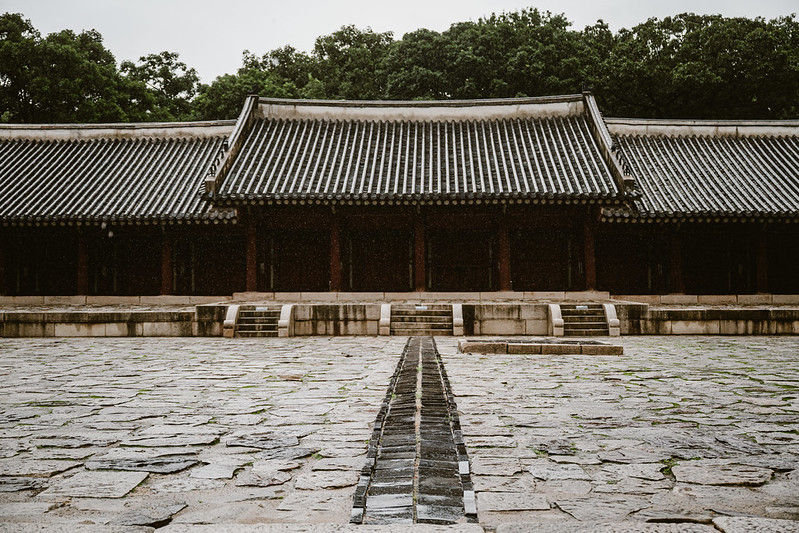
What makes Jongmyo so striking is its deliberate simplicity. The main hall, Jeongjeon, stretches long and low in near-perfect symmetry, its wooden columns rhythmically aligned, its roofline unbroken. There is no ornamental excess here—no bright paint, no elaborate carvings. Instead, the beauty lies in proportion, negative space, and silence. Gravel courtyards amplify footsteps. The surrounding forest buffers the shrine from the city beyond, creating a sense of removal that feels almost monastic. In a metropolis defined by velocity, Jongmyo moves at the pace of ritual and memory.

Jongmyo’s importance continues into the present. The Jongmyo Jerye, the ancestral rite performed with traditional music and dance, is still held annually and has been recognized by UNESCO as Intangible Cultural Heritage. This continuity—ceremonies performed today much as they were centuries ago—makes Jongmyo less a historical site than a living philosophical statement about respect, lineage, and restraint.

Changgyeonggung Palace
Continue to Changgyeonggung Palace, a quieter, more contemplative royal complex. Unlike the grandeur of nearby Gyeongbokgung or the harmonious, nature-integrated layout of Changdeokgung, Changgyeonggung offers a more intimate, human view of Korea’s royal past. Built in the 15th century as a residence for queens and dowager queens, it was designed not to impress foreign envoys, but to serve daily court life, giving the palace a gentle, personal rhythm. Pavilions reflect in tranquil ponds, tiled roofs are softened by trees, and shaded paths invite slow exploration.

The palace’s history is as layered as its architecture. During the Japanese occupation, Changgyeonggung was stripped of its dignity, converted into a zoo and botanical garden—an act intended to erase Korean sovereignty and identity. Its careful restoration stands as a powerful symbol of cultural resilience and national memory. Today, walking Changgyeonggung’s understated halls, quiet courtyards, and reflective ponds feels less like touring a monument and more like stepping into a living chapter of Seoul’s history—a place that rewards those who slow down, notice, and listen.

Changdeokgung Palace
In contrast, Changdeokgung was built to harmonize with the natural landscape. Its buildings bend with the hills, courtyards unfold organically, and shaded paths lead deeper into serene pockets of forest. The Secret Garden (Huwon) is the crown jewel: winding stone bridges arch over still ponds, ancient pavilions peek through maple and pine, and sunlight filters in shafts that dapple the ground in shifting patterns. Birds call through the quiet, water trickles over stone, and even the soft crunch of footsteps on gravel seems to belong to the centuries-old choreography of the palace. While Changgyeonggung immerses you in the rhythms of domestic royal life, Changdeokgung invites contemplation, showing how kings balanced governance, ritual, and nature. Visiting both offers the full spectrum of Joseon palace life—from intimate domestic spaces to ceremonial grandeur—revealing the delicate interplay of power, beauty, and human scale that defined Seoul’s royal past.

Tucked within the graceful grounds of Changgyeonggung Palace, Jondeokjeong Pavilion offers a quiet, intimate glimpse into royal life. Unlike the grand audience halls or ceremonial spaces, this pavilion was designed for contemplation and leisure, primarily used by queens and royal women. From its shaded platform, visitors could gaze over the palace’s reflective ponds, watch the delicate ripples mirror the changing sky, and listen to the soft rustle of trees—moments of serenity set against the backdrop of courtly bustle.
What makes Jondeokjeong especially captivating today is how it balances simplicity with elegance. Its wooden columns and gently sloping roof blend naturally into the surrounding gardens, giving the impression that the pavilion grew from the earth itself. Walking here, it’s easy to imagine the quiet conversations, poetry recitations, and afternoon teas that once unfolded beneath its eaves. Jondeokjeong is more than a historical structure—it’s a space where history, architecture, and nature converge, offering a pause in the rhythm of Seoul’s fast-moving streets.

Bukchon Hanok Village
Taxi or stroll toward Bukchon Hanok Village, climbing gently through narrow lanes lined with traditional wooden homes that have stood, in some cases, for hundreds of years. This neighborhood once housed high-ranking officials and aristocrats during the Joseon Dynasty, placing it physically and symbolically between Gyeongbokgung and Changdeokgung Palaces. Today, it remains one of the best-preserved collections of hanok architecture in the country—not as a museum, but as a living community.

Bukchon Yukgyeong
Pause at Bukchon Yukgyeong, a prized photo spot where layered tiled rooftops spill down the hillside toward the glass and steel of modern Seoul—a single frame capturing centuries of continuity and change. But move gently here. People still live behind these wooden doors, and over-tourism has become a real challenge. Keep voices low, respect posted guidelines, and resist the urge to treat the village like a theme park. Bukchon’s beauty lies not just in how it looks, but in the fact that it endures—quietly, daily, and very much alive.

Kiwa Taproom
If you’re after a brief respite from history, or a place to contemplate the experience so far, visit Kiwa Taproom, one of the most atmospheric drinking establishments that you’re ever likely to encounter.

Gyeongbokgung Palace
Arrive at Gyeongbokgung Palace, Seoul’s most iconic royal site and the symbolic heart of the Joseon Dynasty. First constructed in 1395, it served as the primary royal residence of the Joseon Dynasty and witnessed centuries of power, ceremony, and upheaval. Nearly destroyed during the Japanese occupation, the palace’s meticulous restoration has transformed it into more than a historical site—it’s a living symbol of Korea’s resilience and cultural pride.

Time your visit for the changing of the guard if possible—a vivid display of color, choreography, and tradition played out against towering gates and ancient stone. And if you’re feeling playful (or photo-inclined), this is also the place to lean into Seoul’s lighter side of history: dozens of nearby shops rent traditional hanbok, and visitors dressed in full royal or court attire are not only welcomed, but granted free entry. The result is part time travel, part fashion shoot, and entirely Seoul.

Gwanghwamun Square
From the palace gates, walk straight into Gwanghwamun Square, where history dissolves into modern civic life. Here you’ll find fountains, statues of national heroes, spontaneous performances, and often peaceful protests—a reminder that Korea’s past and present are in constant dialogue. In the span of a few steps, you move from dynastic splendor to democratic energy, a transition that perfectly captures the spirit of the city.

Cheonggyecheon Stream
Follow the city downhill to Cheonggyecheon Stream, a ribbon of water cutting through downtown. Cheonggyecheon Stream is a refreshing, unexpected oasis running through the heart of downtown Seoul. Walking along its banks, you can watch small waterfalls, colorful light displays, and quirky public art installations, all while the city hums around you. The stream is perfect for people-watching, photography, or simply taking a peaceful break from busy streets, and at night, the illuminated pathways create a magical, almost cinematic atmosphere.
Stroll the full length – Walk the 10.8 km (6.7 miles) stream from start to finish, taking in waterfalls, bridges, and sculptures.
Photography – Snap shots of seasonal decorations, murals, and the juxtaposition of historic stonework with modern skyscrapers.
Relax at rest spots – Sit on benches or low walls, dip your feet in shallow water sections, and enjoy the urban oasis vibe.
Watch art installations & light displays – The stream regularly features temporary art, colorful lights, and interactive exhibits, especially in summer and around holidays.
Join seasonal festivals – Events like lantern displays during Chuseok or summer light shows bring extra energy to the area.
Spot fish and wildlife – Small fish and birds inhabit the stream, giving a touch of nature in the middle of downtown Seoul.
Snack at nearby cafés or street stalls – Several points along the stream have local cafés or vendors selling drinks and treats, perfect for a walking snack.
Combine with nearby sightseeing – Connect your walk to Gwanghwamun Square, Insadong, or Dongdaemun for a full-day urban adventure.

Gwangjang Market
Head to Gwangjang Market for lunch (or dinner-I know, it's already been a day), one of Seoul’s oldest and most beloved marketplaces and a cornerstone of the city’s everyday culture. This is not subtle food—this is heat, oil, fermentation, and joy, served fast and without pretense. Markets like Gwangjang have long been where Seoul eats, trades, and gathers, functioning as social hubs as much as commercial ones, places where recipes are passed down as reliably as family names. The market’s combination of noisy crowds, sizzling woks, and neon signs creates a sensory overload that’s uniquely Seoul.
The market is famous for its “mayak kimbap,” literally ‘drug kimbap’, so addictive locals joke you’ll be hooked after one bite. Another fun fact: this is one of the few places where vendors still hand-cut noodles by knife, a live performance of culinary skill.

Sit shoulder-to-shoulder at a worn counter and order tteokbokki slicked in gochujang, crisp mung-bean pancakes pulled straight from bubbling oil, dumplings folded by hands that have done this for decades, and whatever the auntie in front of you insists you try next. That’s part of the ritual. In a city that reinvents itself constantly, Gwangjang endures because it still serves its original purpose: feeding people well, affordably, and together—an unfiltered taste of Seoul that hasn’t lost its soul.
Later, wander Dongdaemun Design Plaza (DDP). Zaha Hadid’s spaceship-like structure feels especially striking after a morning of palaces. It’s Seoul announcing its future without erasing the past.

Jogyesa Temple
After soaking in Seoul’s royal history, start your journey into Insadong with a visit to Jogyesa Temple, the chief temple of modern Korean Buddhism. Dating back to the 14th century, Jogyesa is a serene oasis amid the city’s bustle, featuring several worship halls, a ten-story relic stupa, and a revered 500-year-old tree that has quietly witnessed centuries of change. Step inside to hear the soft chime of bells, catch a whiff of incense drifting through the courtyard, and watch devotees in quiet meditation. The temple’s understated beauty and calm rhythm make it the perfect way to pause, reflect, and prepare for a stroll through the energetic streets that follow.

During lantern festivals, Jogyesa transforms into a kaleidoscope of color: thousands of paper lanterns sway gently in the breeze, reflecting in the temple ponds and casting delicate shadows on the wooden eaves. The scent of incense mingles with the faint aroma of temple tea from nearby vendors, and the occasional gong or drum punctuates the quiet, creating a rhythm both ancient and alive. Even on quieter days, the sunlight filtering through the courtyard trees, the soft footfalls on stone paths, and the gentle rustle of leaves around the 500-year-old tree make the temple feel like a timeless pause—a place where the past and present coexist, and where visitors can feel Seoul’s spiritual heartbeat alongside its urban pulse.

Insadong
From Jogyesa, wander into Insadong, a neighborhood where tradition and contemporary culture meet in vivid, unpredictable ways. Insadong has been a hub for artists, scholars, and merchants for centuries, its streets lined with antique shops, galleries, and tea houses that evoke the rhythms of old Seoul while embracing modern creativity. Historically, it was a center for calligraphy, ceramics, and hanji (traditional Korean paper), and traces of that artistic legacy remain visible in tucked-away workshops and curated boutiques.

Walking down the main street and its winding alleys, you’ll encounter handcrafted souvenirs, traditional brush paintings, ceramic teapots, and delicate hanbok fabrics. Stop at a tea house for a cup of omija-cha (five-flavor berry tea) or green tea, served with quiet ceremony in a room scented with incense, where time slows and the city’s buzz fades to a soft hum. Street performers, pop-up galleries, and occasional craft demonstrations add a dynamic, contemporary layer, reminding visitors that Insadong is not a museum, but a living, breathing cultural district.
For food, Insadong is full of hidden treasures. Try hotteok, a syrupy stuffed pancake, or sample traditional rice cakes (tteok) at one of the local shops. Art lovers should peek into Ssamziegil, a multi-level complex of artisan boutiques where you can watch craftspeople at work, from jewelry making to paper art, and maybe even take home something handmade.

What makes Insadong truly special is this balance of past and present. You can admire centuries-old artwork, shop for souvenirs, sip tea in a hanok-style café, and pass a contemporary gallery—all within a few blocks. But while it’s popular with tourists, the neighborhood remains a cultural heartbeat for Seoulites, so move thoughtfully, support local artisans, and take a moment to absorb the textures, sounds, and scents that give Insadong its unmistakable character.

Jongno District
After a day of temples, markets, and galleries, it’s time to eat. Head to Jongno, one of Seoul’s oldest districts, where tradition lingers not just in architecture, but on the plate. Here, you’ll find WangBiJip, Dohwasun, and Daelyeonjib—restaurants revered for their classic Korean fare, each with its own claim to history. Think rich stews, perfectly grilled meats, and simple dishes elevated by decades of technique. Order the galbi or a sizzling hot pot, let the side dishes pile up, and savor the way Korea’s culinary tradition marries bold flavor with communal ritual. The atmosphere is unpretentious but lively—families, office workers, and tourists all shoulder to shoulder in small, warmly lit rooms, sharing meals the way Seoulites have for generations.
A Note on Korean Barbecue:
Korean barbecue is an interactive, social dining experience that goes far beyond just the food. Diners grill high-quality meats—often marinated beef, pork, or chicken—right at the table, choosing cuts and cooking them to perfection. This hands-on approach turns a meal into an activity, perfect for groups, couples, or even solo diners who want to engage with the process.
Beyond the grilling, the banchan (side dishes) are a highlight: kimchi, pickled vegetables, seasoned sprouts, and other small plates complement the meat and add layers of flavor. The combination of sizzling sounds, rich aromas, and communal sharing makes Korean barbecue a full sensory experience that’s as fun as it is delicious.
Finally, it’s a window into Korean dining culture, where meals are about community, conversation, and savoring multiple flavors in harmony. In Seoul, trying Korean barbecue is almost a rite of passage—it’s not just dinner, it’s a memorable cultural experience.
Here are a few of my favorite side dishes, starting with the most obvious (and iconic):
Kimchi (김치) – Fermented, spicy cabbage or radish; the quintessential Korean side.
Bean Sprouts (콩나물무침, kongnamul-muchim) – Lightly seasoned, crunchy sprouts.
Cucumber Salad (오이무침, oi-muchim) – Spicy, sweet, and tangy cucumber slices.
Corn Cheese (콘치즈, kon chijeu) – Creamy, cheesy corn, often baked and served hot.
Steamed Egg (계란찜, gyeran-jjim) – Fluffy, savory egg custard, light and comforting.

Euljiro District
Once dinner winds down, take a short walk or taxi to Euljiro, a neighborhood that has evolved into one of the city’s most eclectic nightlife districts. Once an industrial zone of print shops and hardware stores, Euljiro now hums with creativity and irreverence. Start at Magpie Brewing Co. for a craft beer in a relaxed, local atmosphere, or Euljiro Brewing for something hoppier, with a backdrop of exposed brick and buzzing conversation. Ace 4 Club offers a high-energy alternative for dance and music, while ArtMonster doubles as gallery and bar, a playground for those who want to drink surrounded by contemporary art.

Euljiro is fun because it’s unpolished and authentic, a city within a city. Neon signs hang over narrow alleyways, shopfronts open to reveal intimate speakeasy vibes, and every corner offers a hint of surprise. Bar-hopping here is as much about discovery as it is about drinks; each stop is a sensory snapshot of Seoul’s restless, experimental spirit. Whether you’re savoring a perfectly poured pint, discovering a hidden gallery, or dancing under a low-hanging light fixture, Euljiro makes it clear that Seoul’s nights are as electric, layered, and unexpected as its days.

Banpo Bridge
As the night deepens, consider one of Seoul’s signature experiences. Head to Banpo Hangang Park to watch the Banpo Bridge Rainbow Fountain, a choreographed spectacle of light, water, and music that reflects across the Han River. Shows run at 7:30 PM, 8 PM, 8:30 PM, and 9 PM, and the best vantage points are along the riverbanks where blankets, snacks, and the hum of the crowd add to the festive atmosphere.

Seoul Tower
Alternatively—or afterward—make your way to Seoul Tower atop Namsan Mountain. Whether by cable car or a fragrant pine-lined hike, the observation deck rewards you with panoramic views of the city’s glittering skyline. On clear nights, neon lights, rooftops, and river reflections stretch endlessly, a contemplative counterpoint to Banpo Bridge’s kinetic energy. For a touch of whimsy, check out the “Locks of Love” fence at the base of the tower, where thousands of padlocks glint under soft lighting.
Whether you choose the dynamic spectacle of Banpo Bridge or the tranquil, panoramic beauty of Seoul Tower—or both—the evening serves as a perfect bookend to a day that spans centuries of Seoul’s history, from ancient gates and palaces to markets, art, and modern nightlife.

Traditional Korean Martial Arts
Near the Namsan Seoul Tower pavilion plaza, you can often catch live performances of traditional Korean martial arts and music—such as Taekwondo and other heritage demonstrations—especially on weekends and during special cultural programs. These shows blend rhythm, martial discipline, and cultural choreography right next to the Seoul skyline.

Separately, Seoul is also home to full theatrical martial arts performances that visitors love, like “JUMP,” a comic, non‑verbal stage show combining Taekwondo, acrobatics, and physical comedy. It’s not at Seoul Tower itself, but it’s a uniquely Korean martial arts experience that’s easy to include in an itinerary.
Day Two: Markets, Art, Modern City Vibes
Day Two dives deeper and wider—moving beyond the historic core into markets, museums, design districts, and nightlife—where Seoul reveals its scale, its contrasts, and its ability to pivot effortlessly from raw and local to polished and electric.
Kimchi Museum >>> Noryangjin Fish Market >>> Sky Pizza >>> Namdaemun Market >>> Leeum Museum of Art >>> COEX Library >>> Apgujeong >>> Figure Museum W >>> Seoul Ink Tattoo Studio >>> Myeongdong Kyoja Main Restaurant >>> Myeongdong Night Market >>> Itaewon >>> OPTIONAL: Bukhansan Hike

Kimchi Museum
Begin with a deep dive into Korea’s most iconic culinary tradition at the Kimchi Museum. Here, you’ll learn how fermentation shaped not just Korean cuisine, but culture itself. Explore interactive exhibits, see the varieties of kimchi from across the peninsula, and maybe even try your hand at making a jar of your own. It’s an engaging, hands-on experience that reveals why this humble dish has become a global ambassador for Korean flavor.
New to kimchi? You're in for a treat. Made from cabbage, radishes, or other vegetables, kimchi is spiced with chili, garlic, ginger, and salted fish or seasonings, then left to ferment. The result is a tangy, spicy, umami-packed side that evolves in flavor over time, meaning every batch has its own unique character.
What makes it truly special is its cultural significance: kimchi is not just food—it’s a symbol of Korean identity, often prepared in large quantities during family gatherings for kimjang (the traditional kimchi-making season). It pairs perfectly with practically any Korean meal, from barbecue to rice dishes, and is a living tradition passed down through generations, embodying both taste and history in every bite.

Noryangjin Fish Market
Next, make your way to Noryangjin Fish Market, a sprawling, multi-level hub of Seoul’s seafood trade since 1927. The market pulses with energy: vendors shout prices over the clatter of trays, live fish and octopus writhe in tanks, and ice and seawater glint under fluorescent lights. Here, seafood is both the commodity and the spectacle.
The real thrill for visitors is the “buy-and-eat” experience. Pick your choice of fish, crab, or shellfish, then hand it off to one of the market’s upstairs restaurants, where chefs transform it into sashimi, grilled delicacies, or steaming seafood stews right before your eyes. It’s raw, lively, and unmistakably Seoul—a place where shopping, dining, and cultural immersion converge in one unforgettable culinary adventure.

Sky Pizza
For a playful lunch stop with a cinematic twist, visit Sky Pizza, a modern pizzeria celebrated not just for its perfectly wood-fired pies, but also for its appearances in Korean film. Sky Pizza became famous as the fictional "Pizza Age" in the Oscar-winning film Parasite, where the Kim family folded delivery boxes and planned their schemes; it's now a popular tourist spot with photos of the director and film memorabilia, attracting fans of the movie.

Namdaemun Market
Afterward, explore Namdaemun Market, Korea’s largest and oldest street market. Dating back to the 15th century, it’s a sensory overload of sights, smells, and sounds: clothing, electronics, souvenirs, and endless food stalls. Try hotteok, skewers, or spicy rice cakes as you wander through alleys that have been the lifeblood of Seoul commerce for centuries.

Leeum Museum of Art
For a touch of art and history, make your way to the Leeum, Samsung Museum of Art. This museum blends traditional Korean art with contemporary works from Korean and international artists. Its architecture alone is a draw: clean, angular modern spaces contrast with traditional wood and stone galleries, creating a visual dialogue between old and new. Whether you linger over Joseon-era ceramics or innovative multimedia installations, the museum exemplifies Seoul’s ability to honor heritage while embracing experimentation.

COEX Library
For a modern twist on learning and leisure, stop by COEX Library, a striking, towering space of books and light. It’s visually stunning, with arched wooden shelves stretching skyward, and a quiet spot to pause with a coffee amidst towering stacks—a serene counterpoint to the bustling streets and markets of the day.
Gangnam Style
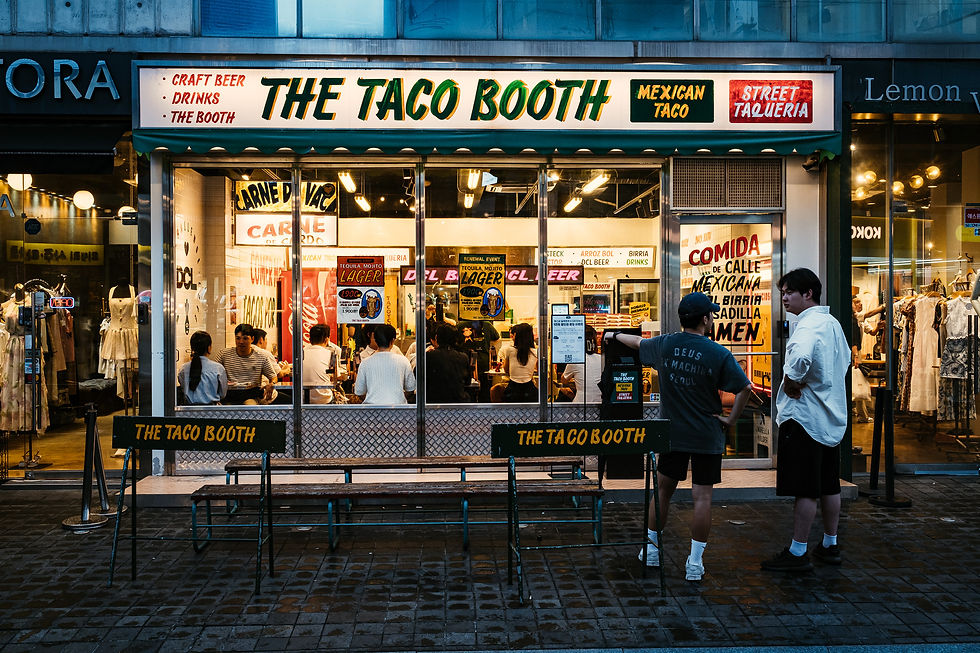
If you've heard anything about Seoul, ever, chances are decent that you've heard of Gangnam, an affluent, trendy district south of the Han River, known for luxury shopping and K-Pop culture, popularized globally by Psy's song "Gangnam Style" as a symbol of wealth and aspiration (I left Seoul a few short years before that earworm was released, thank God). You may have also heard of Apgujeong, typically cited as Seoul's answer to Beverly Hills (read: Rodeo Street), and Cheongdam, occasionally called "Korea's Champs Elysées," with high-end boutiques, designer stores, celebrity hotspots, and trendy cafes, often featured in K-dramas for its depiction of wealth and style. Cheongdam is a major center for Hallyu Korean Wave culture, hosting entertainment agencies and K-Star Road, attracting K-pop fans and luxury shoppers alike. These three are sometimes used interchangeably, but they're not the same - Apgujeong and Cheongdam are distinct but adjacent neighborhoods of Gangnam, with Cheongdam typically considered the ritziest of the two. Got it? Let's continue.

Cheongdam Bars
You could do some shopping here, sure, but what I love about Gangnam are the funky bars and fantastic restaurants. One of my favorites is Alice Cheongdam, right in the heart of the action near K-Star Road and Rodeo Street; within a few blocks you'll also find Chapter Three, Le Chamber, Elements, Keepers, Bar Musk, Zest, and Bar Geranium. In fact, if you ask nicely, a friendly bartender may give you a copy of the Cheongdam bar map. There are some world-class restaurants here, too-I've included a few in my list at the end of the article.

Donkatsu Time
This is as good a time as any to mention my favorite Korean food, donkatsu. Donkatsu has its roots in Japan’s tonkatsu, which emerged in the late 19th and early 20th centuries as Western-style cuisine entered East Asia. The dish itself was inspired by European breaded cutlets, particularly schnitzel, adapted with pork and panko breadcrumbs.
Donkatsu arrived in Korea during the Japanese occupation (1910–1945) and was later embraced and reinterpreted, especially in the decades following the Korean War. Over time, Korea made it its own—larger portions, thinner cuts, a sweeter, richer sauce, and set meals that turned it into a beloved comfort food. Today, donkatsu is a nostalgic classic and a modern favorite, found everywhere from school-lunch-style diners to stylish contemporary restaurants. There's an amazing donkatsu restaurant nearby called Katsu by Konbanl; if you're after my all-time favorite, you'll have to head more than an hour south to the town of Osan - send me a note if you want that closely-guarded secret.

While We're At It... Bibimbap Time
I may love bibimbap even more than I love donkatsu. Bibimbap is one of Korea’s most iconic dishes, beloved for its balance, beauty, and symbolism. At its heart, bibimbap is a bowl of warm rice topped with an array of seasoned vegetables, sliced meat (often beef), a fried or raw egg, and a dollop of gochujang. Before eating, everything is mixed together—bibim meaning “to mix”—creating a harmony of textures and flavors: crisp, soft, savory, spicy, and rich all at once.
Beyond its taste, bibimbap reflects Korean culinary philosophy, emphasizing balance, seasonality, and color. The variety of ingredients isn’t just aesthetic; it represents nutrition and harmony, often aligned with traditional ideas of yin and yang. From humble home kitchens to stone bowls (dolsot bibimbap) that crackle with heat, bibimbap is both everyday food and cultural expression—a dish that feels nourishing, intentional, and deeply Korean. You MUST have stone pot bibimbap during your visit.

Figure Museum W
Beyond the bars, Gangnam offers quirky, immersive experiences: I won't go into the health and wellness treatments that have made the area famous, but you'll quickly realize that if there's an aesthetic or beautification procedure available on this green earth, you'll find it here. Me? I'd rather visit Figure Museum W, an action figure shop and gallery where shelves are packed with collectibles from Korean pop culture, anime, and international franchises.

Seoul Ink Tattoo Studio
Tattoo culture in Korea sits at a fascinating crossroads between tradition, rebellion, and contemporary art. For much of Korean history, tattoos carried a heavy stigma, often associated with criminals or gangs—a perception reinforced during the 20th century. Even today, tattoos exist in a legal gray area: technically, only licensed medical professionals are allowed to tattoo, pushing much of the scene underground. This tension has given Korean tattoo culture a quiet defiance, where ink becomes a form of personal expression rather than public display.
In recent years, however, Korea has emerged as a global leader in fine-line and minimalist tattoo artistry. Seoul-based tattoo artists - especially those in Gangnam - are internationally sought after for their delicate, painterly styles—single-needle florals, micro-realism, calligraphic script, and subtle symbolic designs. Younger generations, creatives, and K-pop idols have helped shift perceptions, making tattoos more visible and more accepted, even if still discreet. The result is a tattoo culture that’s refined, intentional, and deeply aesthetic—less about bold statements, more about intimate storytelling etched into skin.

Myeongdong Kyoja Main Restaurant
Return to the heart of the city for dinner at Myeongdong Kyoja Main Restaurant, famed for its hand-cut kal-guksu noodles and delicate dumplings. The bustling, unpretentious atmosphere, filled with locals and tourists alike, makes this a quintessential Seoul dining experience—a perfect bridge between daytime exploration and the city’s nightlife energy.
Myeongdong Night Martket
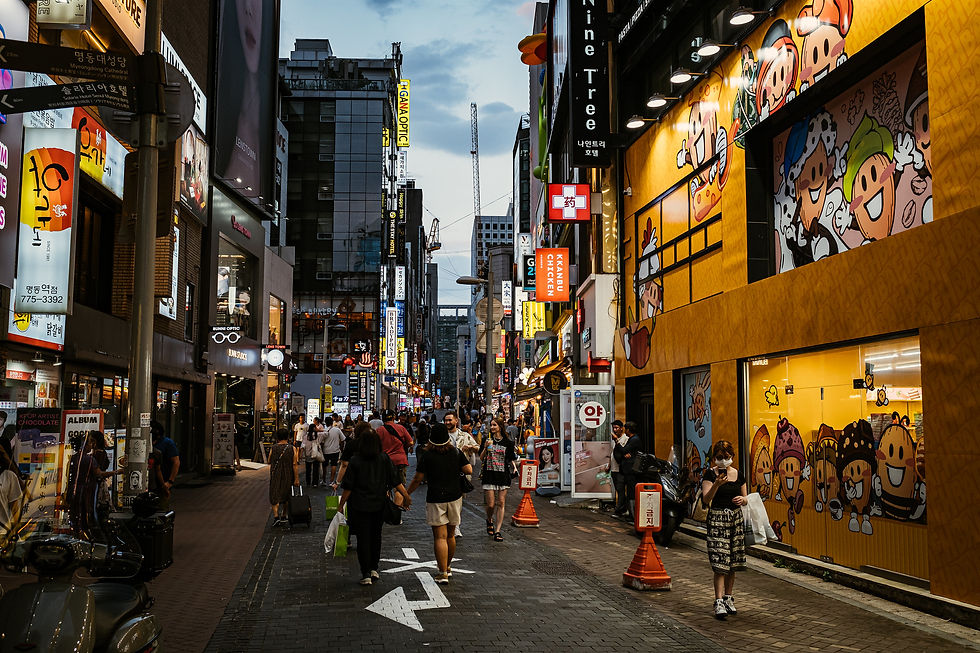
After dinner, step into the electric buzz of the Myeongdong Night Market, where neon signs glow overhead and the streets pulse with movement well into the night. Food stalls line the sidewalks, sending up clouds of steam and the scent of grilled meats, spicy rice cakes, and sugar-dusted treats. Vendors torch cheese until it bubbles, twist hotteok on sizzling griddles, and skewer just about everything imaginable—this is Seoul’s late-night appetite on full display.
Beyond the food, Myeongdong thrives on constant motion. Pop-up shops spill onto the street, cosmetic stores blast K-pop through open doors, and performers occasionally draw small crowds with impromptu routines. It’s a place to snack, shop, people-watch, and wander without a plan—less about checking boxes, more about absorbing the city’s energy.

Itaewon Nightlife
If you want an optional late-night adventure, Itaewon offers a multicultural contrast. Born from the post-war U.S. military presence, the area has evolved into a hub of international cuisine, nightlife, and eclectic culture. Sip a craft beer at The Booth Brewing, enjoy live jazz at All That Jazz, or grab a cozy drink at Woori Shop. Itaewon is a neighborhood where Seoul’s global energy comes alive, and its eclectic mix of food, music, and people provides a strikingly different nighttime vibe from Gangnam or Myeongdong.
By the end of this day, you’ll have experienced Seoul in full spectrum—from fermented kimchi to live seafood, from cinematic pizza to hand-cut noodles, from high art to towering bookshelves, from quirky action figures to stylish cocktails, and from bustling markets to eclectic nightlife districts. It’s a day that captures both the historic and contemporary heart of the city, leaving you ready to plan your next Seoul adventure.
A Note on Neighborhoods:
When I was in my mid-20s I honestly didn't spend all that much time in Gangnam. I much preferred Hongdae (the bar scene was legendary in the late 2000s, and there were plenty of cheap restaurants given the high concentration of students that lived in the area); went to Itaewon often (albeit reluctantly) because that's just what ex-pats did at the time; and found Yeonnam, near Hongdae, late in my tenure. Each is still worth a visit, along with Euljiro and Jongno, two districts I've come to enjoy on recent trips. But I totally get that the profile of Gangnam is such that folks visiting Seoul for the first time are going to want to check it out, so much of my nightlife itinerary focuses on things to do South of the Han.

Optional Adventure: Hiking Bukhansan National Park
For those craving a dose of nature and panoramic city views, Bukhansan National Park offers an unforgettable escape from Seoul’s urban buzz. Just a short subway ride from the city, the park is a rugged haven of granite peaks, dense pine forests, and serene valleys. Trails range from gentle paths to challenging climbs, making it accessible for casual walkers and seasoned hikers alike. I first hiked Bukhansan with my friends in 2009 and it remains one of my fondest memories of my time in Seoul.
As you ascend, the scent of pine mingles with crisp mountain air, and the sounds of the city fade into birdcalls and rustling leaves. Along the way, you’ll encounter ancient Buddhist temples tucked into rocky crags, moss-covered stone walls, and centuries-old fortifications that once protected the capital. The views from the summit are breathtaking: Seoul sprawls beneath you, a shimmering mosaic of skyscrapers, palaces, and rivers, framed by the surrounding mountains.
Bring sturdy shoes and water and be prepared for a rewarding workout. Whether you choose a short hike to a viewpoint or a full-day trek to the highest peaks, Bukhansan offers a rare chance to feel Seoul’s natural heartbeat—a perfect complement to the city’s bustling markets, palaces, and nightlife.
A Note on Dining in Seoul
I hesitate to suggest specific restaurants in Seoul because half the joy of eating here is simply stumbling upon a spot that catches your eye, following the crowds, or following your nose. The city is a playground of flavors, with countless styles of cuisine to try—from classic Korean barbecue to modern fusion, street food stalls to elegant tasting menus—each meal a new adventure. I remember vividly a day where I sampled silkworm larvae for the first (and only) time at a subway station food cart at lunch, then shot a $1,000 per-seat tasting dinner a few hours later. And yet some folks prefer a few insider tips, so here are mine (leaning toward the high-end, as you’ll find plenty of more affordable options as you wander the neighborhoods in my itinerary):
7th Door – A modern Korean restaurant blending refined techniques with local ingredients. Reservations are tricky, but if luck favors you, a walk-in here is a memorable experience.
Born and Bred – Premium Korean beef served with precision in a sleek, contemporary setting. Known for its high-quality cuts and expert grilling, it’s a must for meat lovers.
Byeokje Galbi (several locations) – Famous for its legendary marinated galbi (short ribs), this place offers a traditional Korean BBQ experience at the top tier.
EVETT – The definition of extravagant. EVETT delivers multi-course tasting menus featuring rare ingredients, masterful plating, and an unforgettable fine-dining journey.
Jungsik – Modern Korean cuisine elevated to Michelin-star status. Innovative flavor combinations and artistic presentations make this a special occasion destination.
Mingles – A sophisticated yet approachable spot that combines Korean flavors with contemporary techniques. Seasonal tasting menus highlight local ingredients with international flair.
Tosokchon Samgyetang – Famous for its ginseng chicken soup, this traditional eatery offers a comforting, hearty Korean classic in a rustic hanok setting.
Gaon – Another Michelin-starred option, Gaon specializes in traditional Korean cuisine served with meticulous attention to detail and modern presentation.
Mapo Jeong Daepo – For an authentic Korean BBQ experience with lively atmosphere, generous portions, and high-quality meats at a more casual price point.
Joo Ok – Innovative tasting menus with a focus on Korean seasonal ingredients, balancing elegance and accessibility in modern fine dining.
WHAT DID I MISS?
Even after two full days, you’ll barely scratch Seoul’s surface – I as mentioned at the top, I lived here for several years and it seemed like I found something new and exciting to do every weekend. Seoul is immense, endlessly layered, and packed with experiences, from hidden alleys and bustling markets to mountains, museums, and nightlife, making every visit feel like just the beginning.
First, I’d be remiss if I didn’t mention Yongsan Electronics Market (용산전자상가): This sprawling multi-building complex houses hundreds of shops specializing in cameras, lenses, photography gear, computers, and electronics. Both new and used cameras are available, and you can often haggle a bit on prices. It’s especially popular among photography enthusiasts looking for Korean or international models, accessories, and professional equipment. This is where I bought my first semi-professional camera!
While Yongsan is the main hub, Namdaemun Market and Dongdaemun Market also have smaller electronics sections where cameras and related gear can sometimes be found, but Yongsan is the heart of the camera shopping scene.
It would be simple enough to swap any of these experiences into your itinerary:
Seochon Village – Quaint hanok-lined neighborhood with cafés, galleries, and artisan shops.
Anyang Art Park – Outdoor sculpture and installation park blending nature and contemporary art.
Seoul Olympic Park – Sprawling green space with sculptures, gardens, and recreational areas.
Seongsu (Seoul’s Brooklyn) – Industrial warehouses turned into cafés, boutiques, and street art.
Ihwa Mural Village – Hillside neighborhood filled with murals, sculptures, and photography spots.
Namsangol Hanok Village – Recreated village with demonstrations and cultural experiences.
K-Pop Experience – Learn choreography, visit themed cafés, or behind-the-scenes production.
Korean Karaoke (Noraebang) – Singing rooms with snacks and soju, a quintessential pastime.
Seoul Forest – Urban park with walking trails, deer enclosures, and public art.
Bongeunsa Temple – Temple stay experiences, lantern workshops, and cultural immersion.
Hangang River Cruise – Scenic boat rides along the Han River, especially magical at sunset.
Eurwangni Beach - Offers soft sand, calm waters, and a relaxed vibe—a quick seaside escape from the city’s bustle and only an hour away.
DMZ Tour – Observation posts, tunnels, and Dorasan Station for a glimpse of Korea’s divided history.
THE DETAILS
Currency: Korean Won (KRW)
- You’ll get by most of the time using your credit card as Seoul becomes more and more cashless, but I would keep some Won on hand for markets and smaller shops in the older neighborhoods.
When To Go:
The best time to visit Seoul depends on what you want to experience, but generally, the city shines in spring (April–June) and autumn (September–November).
Spring (April–June)
Pros: Cherry blossoms, azaleas, and magnolias bloom across palaces, parks, and streets; mild temperatures (10–20°C / 50–68°F); perfect for walking tours, palaces, and outdoor markets.
Cons: Can be busy during cherry blossom season, especially around popular spots like Yeouido and Gyeongbokgung.
Autumn (September–November)
Pros: Stunning fall foliage in palaces, mountains, and city parks; clear skies; comfortable temperatures (10–22°C / 50–72°F); ideal for hiking at Bukhansan or Namsan.
Cons: Popular spots for leaf-viewing can get crowded on weekends.
Summer (July–August)
Pros: Festivals, night markets, and lively Han River activities.
Cons: Hot, humid, and rainy (monsoon season), with temperatures often exceeding 30°C (86°F).
Winter (December–February)
Pros: Crisp, clear air; festive lights and ice skating; lower hotel rates; snow-covered palaces and mountains are beautiful.
Cons: Cold (often below 0°C / 32°F); outdoor activities require heavy winter clothing.
Sweet spot: Late April to early June or mid-October to early November—mild weather, fewer tourists than peak cherry blossom weekends, and picture-perfect scenery.
Where to Stay:
1. JW Marriott Dongdaemun Square Seoul – Located in the heart of Dongdaemun, this luxury hotel combines modern elegance with convenience. Perfect for exploring Dongdaemun Design Plaza, Heunginjimun Gate, and night markets right outside your door. Rooms are spacious, amenities are world-class, and the rooftop views of the city are spectacular.
2. Lotte Hotel Seoul – A prestigious option in central Myeongdong/Gwanghwamun. Ideal for travelers wanting easy access to shopping, palaces, and fine dining. The hotel blends traditional Korean touches with luxury service, offering excellent restaurants, a spa, and elegant rooms.
3. RYSE, Autograph Collection (Hongdae) – A modern, design-forward hotel in the youthful and artistic Hongdae district. Great for travelers seeking nightlife, street art, live music, and boutique cafés. Rooms are colorful and contemporary, and the hotel’s vibrant public spaces make it a destination in itself.
Getting Around Seoul
1. Subway – The Easiest Way
Seoul’s subway system is extensive, punctual, and easy to navigate, covering the city and surrounding areas. T-money card: A rechargeable transportation card that works on subways, buses, and even taxis. Pick one up at convenience stores or subway stations.
- English signs and announcements are standard
- Most tourist spots are near subway stops.
- Subway apps like KakaoMetro or Naver Map are invaluable for planning routes
- Google Maps is useless here!
2. Buses – Efficient & Cheap
Buses are color-coded: blue (long-distance), green (local), yellow (neighborhood loops), and red (express). Useful for reaching destinations that subways don’t cover, like smaller temples or hiking trailheads. T-money cards can be used for payment, and transfers between subway and bus are often discounted.
3. Taxis – Convenient for Night Travel
Taxis are abundant and affordable compared to many global cities. Types: Regular (orange/white), deluxe (black with gold trim), and international taxis with English-speaking drivers. Apps like Kakao T make ordering easier than hailing on the street.
4. Walking & Exploring Neighborhoods
Many districts—Insadong, Bukchon, Myeongdong, Hongdae—are best explored on foot. Walking allows you to notice hidden cafés, side streets, and local shops that don’t appear on maps.
5. Biking & Riverside Paths
Seoul has growing bike infrastructure, especially along the Han River, Olympic Park, and select neighborhoods. Bikes can be rented via apps like Ddareungi for short-term rides.
6. Optional: KTX & Regional Travel
For trips outside Seoul, such as DMZ tours, Busan, or coastal destinations, Korea’s high-speed KTX train is fast and reliable.
Avoid rush hour (8–9 AM, 6–7 PM) if possible—it gets very crowded.
Many taxis and buses now accept QR codes or apps instead of cash.
Quick Travel Tips for Seoul
Master the T-money card – Not just for subways and buses, your T-money card can also pay for taxis, convenience store snacks, and even some cafés. Load it once and swipe your way across the city effortlessly.
Timing is everything for markets – Visit Gwangjang, Namdaemun, or Myeongdong markets early in the morning, just before dinner, or late in the evening. You’ll avoid the peak crowds and get the freshest street food—plus, photo opportunities are much easier without throngs of people.
Use public lockers – Many subway stations (there are hundreds!), markets, and tourist sites offer coin-operated or app-accessible lockers. Drop off shopping bags or extra layers so you can explore freely without hauling your stuff around.
Download Naver Map or KakaoMap – Google Maps is useless in Korea. These local apps provide accurate walking directions, public transit info, and even real-time bus locations—essential for seamless navigation.
Mix neighborhoods and moods – Don’t stick to one type of Seoul experience in a day. Pair a morning palace or museum visit with a street food lunch, then a café stroll in a hip neighborhood like Seongsu-dong or Hongdae, and finish with nightlife in Gangnam or Itaewon. The contrast is part of Seoul’s magic.


Comments