
3 Days in Rio de Janeiro: The Almost Perfect Itinerary


The plane banks low over a city that feels less built than draped: jungle spilling down mountainsides, granite peaks punching through clouds, neighborhoods stitched between ocean and stone. Within minutes you’re standing on a beach that looks staged for a film. Except it isn’t. This is just Tuesday. And that Michael Jackson statue you think you saw? Totally real.
Rio is contradiction at scale. It’s samba and stillness. Chaos and choreography. You can spend the morning tracing the curve of Copacabana with a strong coffee in hand, the afternoon rising into the arms of Christ the Redeemer, and the evening somewhere dimly lit, where the music is live, the air is thick, and no one seems in a hurry to leave.
But what makes Rio unforgettable isn’t just the landmarks. It’s the rhythm. The way the city moves. The way it pulls you into its cadence, loosens your grip on time, and reminds you, subtly at first, then unmistakably, that life is meant to be felt as much as it is planned.
This is not a place you check off. It’s a place you give into. Is it more or less dangerous than its reputation suggestions? That’s not for me to say – though I was totally, utterly fine everywhere I went. But if you do it right, just for a few days, Rio might feel—dangerously—almost perfect.
I am changing things up here and adding a third day to my itinerary. For one, no one comes to Rio for just two days; almost everyone I met was here for four days to a week or more. Secondly, the city is one of the largest on earth, and you’d do yourself a disservice trying to pack in too much too quickly. Even with that, what you’ll see below is pretty ambitious; I wouldn’t fault you for chopping what I’ve got here in half to slow your pace over three days.
DAY 1: Gardens, Beaches & The Hills Above the City
This is a full, hectic day. Rio is a big city! Either lace up and embrace a lot of walking (my style), or break it up with quick Ubers that make Rio feel surprisingly manageable. Either way, you’re moving through layers of the city: jungle, shoreline, hillside neighborhoods, and sweeping viewpoints.
Parque Lage >>> Cemitério de São João Batista >>> Botafogo Neighborhood >>> Praia Vermelha >>> Forte Duque de Caxias >>> Mureta do Leme >>> Copacabana Beach >>> Pavao Azul Bar >>> Pedra do Arpoador >>> Ipanema Beach >>> ETTA Bar >>> Delirium Café Rio de Janeiro >>> Mad Brew >>> Pure Brasa Ipanema >>> Nossa Ipanema
Parque Lage
I wanted to start here—coffee in the courtyard beneath the jungle-draped cliffs sounded like a great way to dive into the city—but as of 2026 it’s closed for renovations. Lage is styled as where Rio feels most cinematic—palms, stone, and the looming presence of Corcovado turning a simple stroll into something quietly transportive.
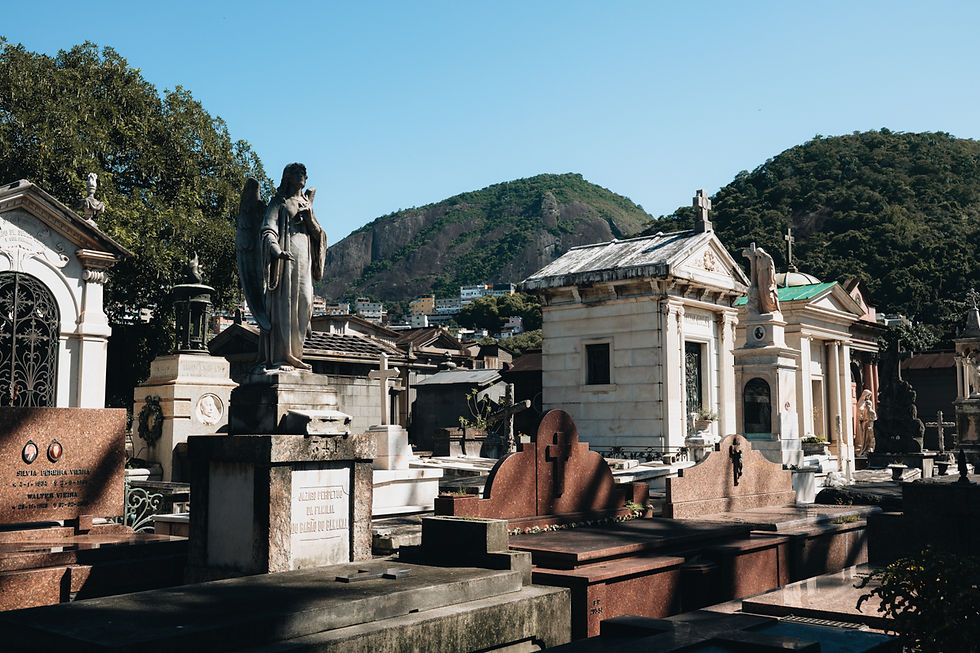
Cemitério de São João Batista
Quiet, unexpected, and strangely beautiful. This isn’t just a cemetery; it’s a sculptural archive of Brazilian history, where ornate tombs and towering mausoleums tell stories in marble and shadow. It slows you down in a city that rarely does, offering a reflective counterpoint to the coastline’s energy.

Botafogo Neighborhood
Botafogo feels like Rio in a more lived-in key—less polished than Ipanema, more creative, a little looser around the edges. Set against a backdrop of Sugarloaf and a working bay, it’s where locals actually go out, not just where visitors pass through. The energy tilts young and artistic, with spots like Surreal Bar leaning experimental, Quarinho Bar delivering something more classic and social, and Mãe Joana Tattoo Bar blurring the line between nightlife and counterculture. It’s the kind of neighborhood that doesn’t try too hard—and ends up being more interesting because of it.

Praia Vermelha
A tucked-away crescent of calm beneath Sugarloaf. The water feels gentler here, the crowds thinner—a moment of stillness before Rio opens wide again. I was under the impression that this beach was significantly local, and the vibe was fantastic. The kind of place you linger longer than planned, simply because nothing is asking you to leave.
Forte Duque de Caxias
A short climb rewards you with one of the most underrated views in the city—360 degrees of ocean, mountain, and skyline. It feels both strategic and serene. The path up—winding, shaded, and slightly rugged—makes the view feel earned.

Mureta do Leme
A simple seawall, but this is where locals chill. Cold drink in hand, watching waves crash and the city glow—it’s Rio at its most unpolished and perfect. An awesome detour if there ever was one. I captured some of my favorite photos of the trip from this spot.

Copacabana Beach
Iconic for a reason. The black-and-white promenade, the endless arc of sand—and across from it, the Copacabana Palace, still radiating old-world glamour. Even if you’ve seen it a hundred times in photos, the scale and movement of it in person feels entirely new.
Copacabana Beach didn’t become famous for just one reason. It’s the rare place where geography, culture, and timing align perfectly. First, the setting. A sweeping, four-kilometer crescent framed by mountains and dense cityscape, it feels both vast and enclosed, like a natural amphitheater for daily life. Few urban beaches in the world look this cinematic straight out of the gate.
Then there’s the design. The black-and-white wave-pattern promenade, created by landscape architect Roberto Burle Marx, is as iconic as the beach itself. It turned a shoreline into a visual identity. Instantly recognizable, endlessly photographed.
But what really made Copacabana Copacabana was the 20th century. In the 1930s–50s, it became the playground of Brazil’s elite and international jetsetters, anchored by places like the legendary Copacabana Palace Hotel. Celebrities, politicians, and artists all passed through, giving it a global mystique long before mass tourism.
Add to that Rio’s beach culture—arguably the most vibrant in the world. This isn’t a passive beach. It’s volleyball, footvolley, vendors, music, cold drinks, conversation. It’s where the city lives, not just relaxes.
And finally, scale and spectacle. Copacabana hosts some of the largest gatherings on earth, especially New Year's Eve celebrations in Copacabana, where millions dress in white and crowd the sand for fireworks over the Atlantic. Put it all together, and it’s not just a beach—it’s a stage. One that Rio, and the world, has been performing on for nearly a century.
Loved the beach. 100% one of those once-in-a-lifetime attractions. That said… the iconic bar at the Palace Hotel was undergoing renos, so I missed out on my chance to see that space. Next time!
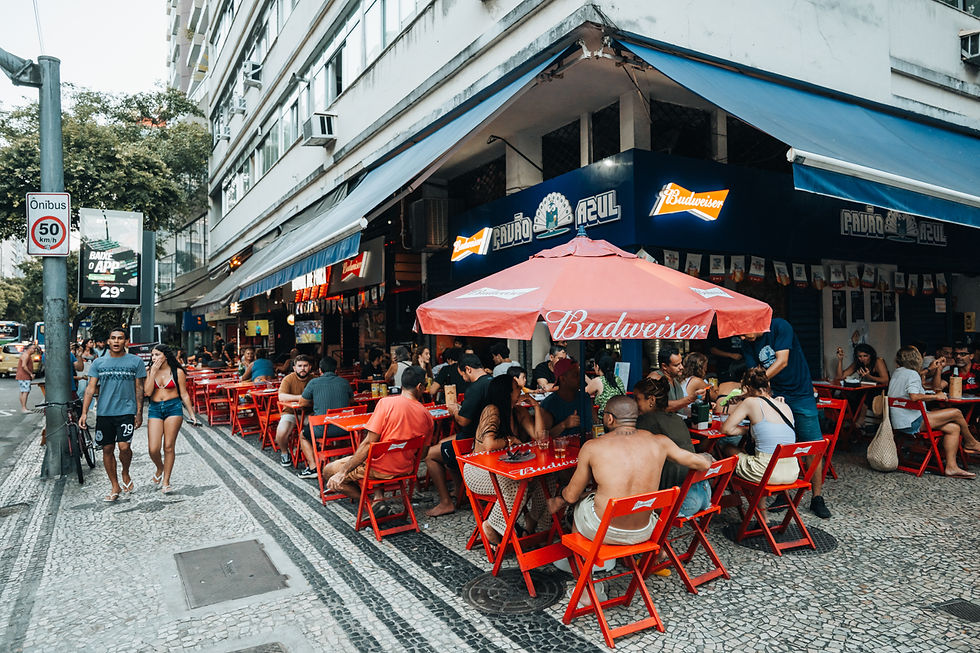
Pavao Azul Bar
Depending on your timing, you may want to grab a bite at Pavao Azul Bar, one of my favorite places in Rio. Pavão Azul Bar is great for the exact reason a lot of “must-visit” places aren’t—it never tried to be one. This is a true boteco: small, crowded, a little chaotic, and completely unpolished. It’s been around since the 1950s, earned status as a cultural landmark, and still operates with the same no-frills, neighborhood energy.
Locals pack the place, spill out onto the sidewalk, drink cold beer, and talk loudly over small tables. The cod fritters (pataniscas de bacalhau) are the signature—simple, crispy, and widely considered some of the best in the city. Cheap beer, hearty plates, fast service, no polish. In a city full of beautiful places, Pavão Azul stands out by being the opposite: tight, loud, a little messy—and absolutely authentic. Don’t miss it.

Pedra do Arpoador
Come here for the view back over Copacabana and Ipanema. It’s a natural pause point—granite, wind, and horizon. It’s also one of the best places to watch the light shift, when the city softens and the coastline begins to glow. I was here at dusk and astonished at the views.

Ipanema Beach
Ipanema Beach is where Rio feels most effortlessly dialed in. The setting is almost too perfect—the curve of sand, the backdrop of Dois Irmãos, the light that seems to linger just a little longer here. But what makes it special is the rhythm: a beach divided into subtle social zones, where locals gather by vibe, not accident. It’s stylish without trying, social without pressure, and always in motion—volleyball, music, conversation, sunset applause at Pedra do Arpoador just down the way. This isn’t just a place to sit—it’s a place to be.
Ipanema Drinks and Dinner and Drinks
The food and drink scene here is stacked. This may be controversial, but I’d say it’s better than Copa. Beach kiosks for fresh coconut water and caipirinhas, polished restaurants just off the sand, and a steady rhythm of bars that keep things moving long after sunset. You can wander without a plan and still eat remarkably well.
But if you want a tighter hit list, these are worth your time:
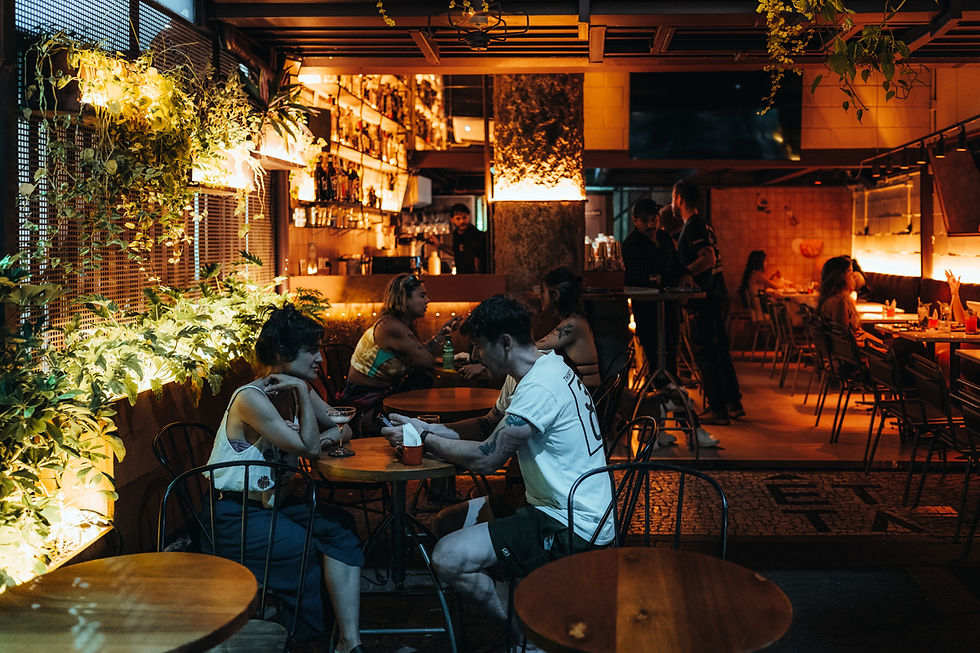
ETTA Bar. Low-lit, stylish, and a little bit hidden... for being on a very busy and popular street. This is where you start the night and suddenly realize you’re staying longer than intended.

Delirium Café Rio de Janeiro. A beer lover’s playground with an almost absurd selection; easy to lose an hour (or three) working your way through it. Sit outside and order empanadas to go with your beer.
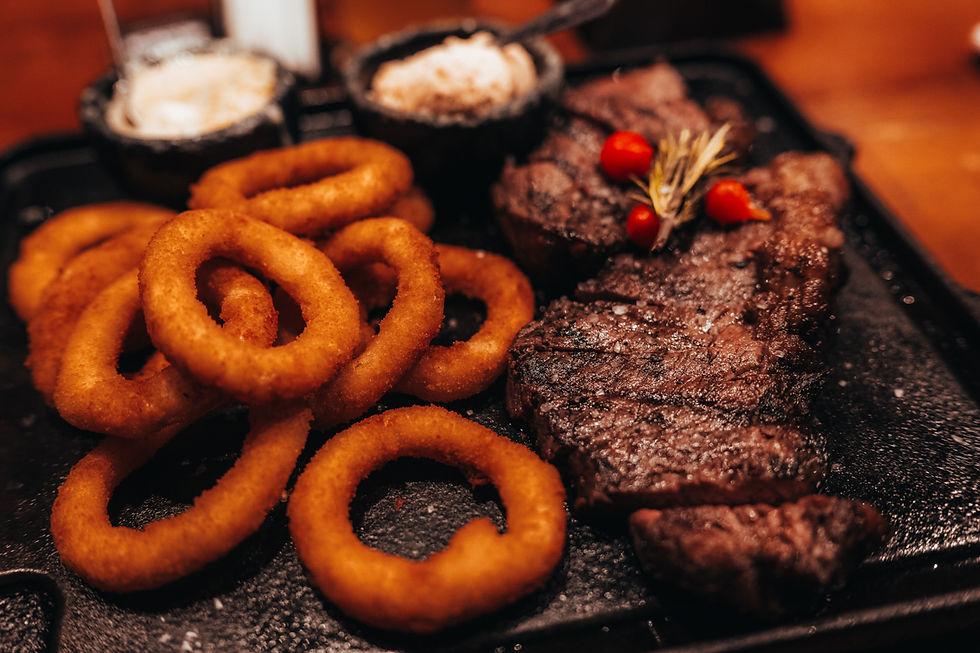
Mad Brew. Unassuming at first glance, but quietly one of the better steak spots in the area. Sneaky, in the best way. Order picanha, the crown jewel of Brazilian cuts—taken from the top of the rump, with a thick cap of fat left intact. That fat is the whole point: it renders slowly over open flame, basting the meat as it cooks and creating that signature flavor and tenderness.

Pure Brasa Ipanema. Casual, local, and deeply satisfying—grilled meats, cold drinks, and zero pretense.

Nossa Ipanema. The crowning jewel. Effortless, vibrant, and exactly what you want Ipanema to feel like, where a great meal turns into a long, lingering night without ever trying too hard. Sit at the bar, ask the bartender to mix up what they like, and enjoy.

DAY 2: Cosme Velho & The Hills
This is where Rio reveals its vertical nature: neighborhoods tucked into folds of jungle, viewpoints that feel stolen rather than staged, and a rhythm that trades beachside ease for something more layered and introspective. You’re not skimming the surface today—you’re moving through the city’s spine, where history, daily life, and sudden, staggering views collide.
There’s a natural flow to it, but it’s not effortless. Expect hills, heat, and moments where the path feels uncertain—in the best way. Some stretches reward walking; others practically demand a quick Uber. Either way, this is a day of contrasts: grand icons and hidden corners, polished landmarks and places that feel half-forgotten. By the time you descend back toward Botafogo, the city will feel different. Less like a postcard—and more like something you’ve started to understand.
Trem do Corcovado >>> Christ the Redeemer >>> Z42 Arte >>> Largo do Boticário >>> Reservatório do Ascurra >>> Mirante do Pedrão >>> Michael Jackson Square >> Mirante Dona Marta >>> Santa Teresa Tram >>> Mirante do Rato Molhado >>> Bar do Mineiro >>> Um Bonde para Santa Teresa >>> Parque das Ruínas >>> Bar do Serginho >>> Escadaria Selarón >>> Praça Cardeal Câmara >>> Metropolitan Cathedral of Saint Sebastian >>> Drinks and Dinner >>> Explorer Bar >>> Booze Bar Lapa >>> Brew Bar da Fábrica >>> Cacimba Bar

Trem do Corcovado
Your carriage to one of the most famous statues on earth. The ascent matters. The train winds through dense forest, building anticipation until the city suddenly reveals itself. It transforms what could be a simple visit into a gradual, almost theatrical arrival. Go early or go late… and book your tickets in advance. This is one of the most famous destinations on earth, after all.

Christ the Redeemer
It’s as monumental as you expect. Not just the statue, but the elevation, the scale, the city spilling out beneath you. For all its fame, it still manages to feel personal, like the entire city has been placed briefly at your feet.
Completed in 1931 atop Corcovado, Christ the Redeemer has become more than a landmark—it’s a national symbol. Designed by Brazilian engineer Heitor da Silva Costa and brought to life with sculptor Paul Landowski, the statue reflects both faith and identity, standing as a quiet, enduring emblem of Brazil itself. Its outstretched arms aren’t just iconic; they’re intentional, a gesture of welcome that has come to define how the city presents itself to the world.

Cosme Velho & Laranjeiras
Leafy, residential, and layered with history. A quieter Rio—less spectacle, more texture. These streets reward wandering, where the city showcases intimate fragments rather than grand gestures.
Z42 Arte
Small, contemporary, and personal. A reminder that Rio’s creative pulse isn’t confined to its landscapes. It’s the kind of place you stumble into and leave feeling like you’ve discovered something not everyone sees.

Largo do Boticário
Faded grandeur in pastel tones. It feels like a place suspended between eras—slightly worn, deeply atmospheric. There’s a cinematic stillness here, as if the city briefly forgot to move on.
Largo do Boticário began as one of Rio’s most elegant residential pockets in the 19th century, a quiet square tucked into the green folds of Cosme Velho where coffee barons and merchants built pastel neoclassical houses that felt almost European in their symmetry and restraint. Over time, like much of old Rio, it faded into near-forgotten beauty—weathered facades, creeping vegetation, and a sense that the city had simply grown around it rather than through it.

In recent years, however, it has been carefully revived, with restored buildings now used for cultural programming, private events, and boutique hospitality, giving it a second life without stripping away its patina. The result is something rare in Rio: a place that feels both preserved and lived-in, where history hasn’t been polished out, just gently reactivated.

Reservatório do Ascurra
Keeping this here so you know to skip it – it’s an old, forgotten building that you can hardly see save for the overgrowth. Not worth the effort. Not sure why this pops up on so many lists of recomended sights in Rio, but it shouldn't.

Mirante do Pedrão
A lesser-known viewpoint, and better for it. Fewer people, same staggering perspective. It feels like a secret the city hasn’t quite decided to share. Just know that you will walk, and walk, and then walk some more to make the ascent – for what it’s worth, I didn’t see anyone else trekking up this hill (all others at the top opted for an uber), and no one at the summit was even close to as sweaty as I.
Michael Jackson Square
Yes, that Michael Jackson. A slightly surreal but undeniably memorable cultural footnote in the hills of Santa Teresa. It’s equal parts homage and curiosity—unexpected, a little odd, and very Rio. You may also want to go with a guide into this neighborhood; known as one of Rio’s “safer” favelas, I would not suggest visiting here in anything other than daylight. Google the music video.
Mirante Dona Marta
One of the best views in Rio—full stop. The hike up makes it feel earned; the panorama makes it unforgettable. From here, the city finally makes sense—mountain, ocean, and neighborhood woven into a single frame.
Santa Teresa & Lapa Descent
You may have already had enough for one day… but I am pressing on! Santa Teresa is spectacular, and I’m putting it here as an afternoon option. You may prefer to do it on a day of its own, however.
I love Santa Teresa (and Lapa) because it is less polished than the beaches, more playful than the hills above Cosme Velho. The afternoon unfolds downhill, literally and figuratively, moving from quiet tram lines and hillside viewpoints into the color and rhythm of Lapa. It’s best done as a flowing sequence: part transit, part wandering, part accidental discovery.

Uber to Bonde de Santa Teresa (Begin Tram Ride)
You’re stepping onto one of Rio’s most nostalgic experiences—the old yellow tram rattling up into the hills of Santa Teresa. It feels half functional transport, half time machine, threading through narrow streets and over colonial-era arches.

Ride the tram toward Dois Irmãos (end point)
The higher you climb, the quieter the city becomes. Rooftops slip away, trees close in, and Rio starts to feel like something suspended between jungle and memory.
Mirante do Rato Molhado
A small, easy-to-miss viewpoint that delivers one of those “stop walking immediately” moments—tight streets opening suddenly onto sweeping cityscape.
Bar do Mineiro
Classic Santa Teresa institution. Come hungry—the feijoada and cold beer combo is as close to ritual as lunch gets here.

Um Bonde para Santa Teresa
A colorful mosaic tribute to the tram itself, capturing the neighborhood’s identity in tiles, texture, and local pride.
Parque das Ruínas
A ruined mansion turned cultural space, where skeletal walls frame panoramic views over the city. It’s atmospheric in a way that feels almost staged—but isn’t.
Bar do Serginho
Unpretentious, local, and perfectly placed for a pause. It’s less about the menu and more about the rhythm of sitting in Santa Teresa mid-afternoon.
Escadaria Selarón
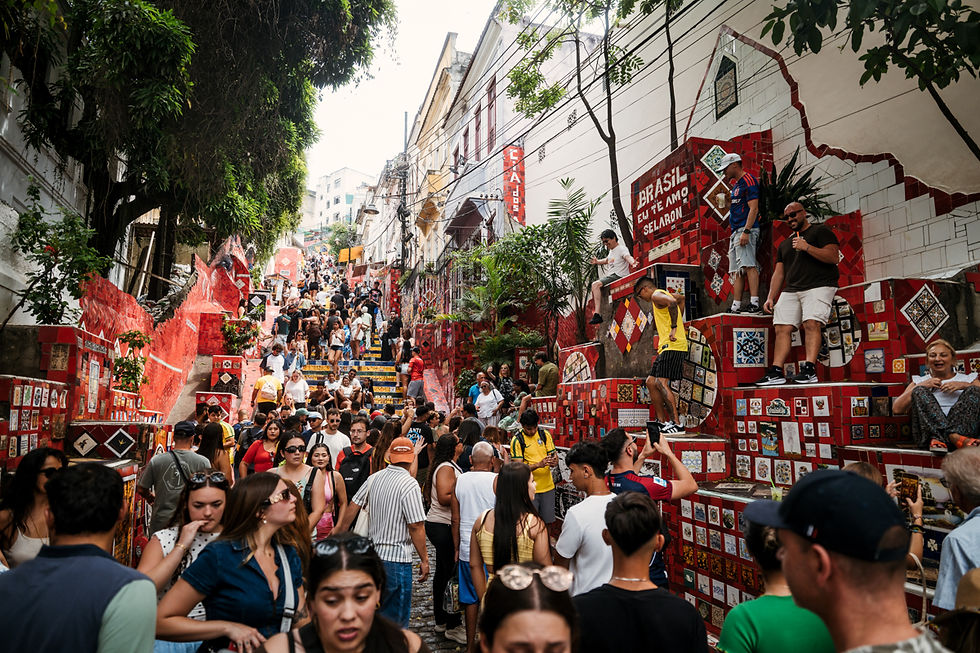
Escadaria Selarón is one of Rio’s most recognizable landmarks, but it didn’t begin as a landmark at all. It began as a personal obsession.
In the early 1990s, Chilean-born artist Jorge Selarón started renovating the worn staircase that runs between Santa Teresa and Lapa, initially as a simple act of neighborhood care. He began lining the steps with ceramic tiles in Brazil’s green, yellow, and blue, many of them salvaged from broken pieces or donated by visitors. What started as a small, self-funded project slowly expanded over decades into a living artwork of more than 2,000 tiles from over 60 countries.
Selarón famously called it his “tribute to the Brazilian people,” and he worked on it continuously—often alone, sometimes in near-poverty, refusing to declare it finished. The staircase evolved with him, shifting colors, patterns, and meanings as he kept adding new tiles, many featuring pregnant women, a recurring motif he believed symbolized life and renewal.
Today, it stands not just as public art, but as a kind of autobiography in ceramic form: chaotic, vibrant, deeply personal, and unmistakably Rio in spirit—layered, improvised, and alive with constant reinvention. Word of caution; this is one of the busiest attractions I have visited in my life. Plan accordingly.

Praça Cardeal Câmara (Arcos da Lapa views)
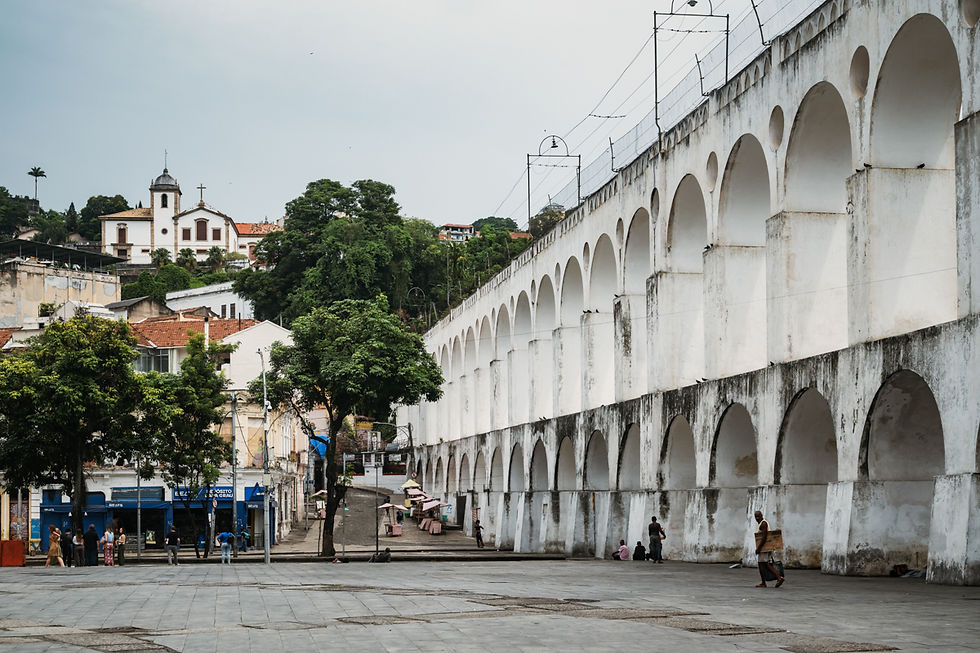
You end here looking out toward the Arcos da Lapa, the historic aqueduct that frames Lapa’s energy below. It’s the transition point—Santa Teresa’s quiet giving way to the city’s nightlife pulse.
By the time you reach Lapa, the day has shifted gears completely. What began with hillside calm ends in urban rhythm—color, sound, and movement building as evening approaches.

Metropolitan Cathedral of Saint Sebastian
From here, it’s a short walk into one of the most striking architectural contrasts in the city: the Metropolitan Cathedral of Saint Sebastian. Designed by architect Edgar de Oliveira da Fonseca, the cathedral was completed in 1979 and is often mistaken at first glance for something ancient or pre-Columbian, rather than modern. Its massive conical shape was inspired by Mayan pyramids, a deliberate break from traditional European church design, signaling a forward-looking, distinctly Brazilian expression of Catholicism.

Step inside and the scale shifts again—four towering stained-glass panels rise nearly the full height of the structure, flooding the interior with color and vertical light. It’s austere, monumental, and slightly surreal: a space that feels less like ornamented tradition and more like a bold architectural statement about faith, modernity, and identity colliding in the middle of downtown Rio.
Together, Selarón’s staircase and the cathedral form an unexpected pairing—one intimate and handmade, the other vast and engineered—but both reflecting the same city impulse: transformation through layering, reinvention, and scale.

Drinks and Dinner
As evening settles over Lapa, the neighborhood shifts into something electric—arches glowing, music spilling into the streets, and bars filling with a mix of locals, artists, and travelers who all seem to have found their way here at the same time.

Start things off at Explorer Bar, a polished but relaxed spot that’s perfect for easing into the night. It has that early-evening energy—good cocktails, easy conversation, and just enough buzz to signal that the night is beginning, not ending. And fantastic views.

From there, drift into Booze Bar Lapa, where things get louder and looser. It’s classic Lapa: crowded, energetic, and built for late-night momentum rather than quiet sipping. You don’t really “go” here—you get absorbed into it.

If you want something more behind-the-scenes and slightly more refined, Brew Bar da Fábrica offers a craft-forward break from the chaos. Think well-made beers, industrial edges, and a calmer pocket of conversation before heading back into the current.

And then there’s Cacimba Bar—the kind of place that feels like it shouldn’t be as good as it is. It’s casual, unpretentious, and deeply local, where the food is solid, the drinks are cold, and the vibe is pure Rio without any performance.

DAY 3: Downtown Rio: Empire, Memory & the Edge of the Bay
You move through centuries in a single afternoon: from colonial churches and imperial palaces to modern museums and contemporary murals painted on the bones of the port. This is not the Rio of beaches or hills, but the Rio of power, history, rupture, and reinvention. It’s denser, rougher in places, and far more complex in meaning.
Logistically, this is a day of transitions—some stretches are best walked, but others (especially the port area) are better handled with short Ubers between sites. The energy shifts block by block.
Convento de Santo Antônio >>> Theatro Municipal do Rio de Janeiro >>> Museu Nacional de Belas Artes >>> Fundação Biblioteca Nacional >>> Museu de Arte Moderna do Rio de Janeiro >>> Confeitaria Colombo >>> Etnias Mural >>> Cais do Valongo >>> Pedra do Sal >>> Museu do Amanhã >>> Mosteiro de São Bento >>> Igreja de Nossa Senhora da Candelária >>> Igreja de Nossa Senhora do Carmo da Antiga Sé >>> Paço Imperial >>> Palácio Tiradentes >>> Pão de Açúcar (Sugarloaf Mountain) >>> Lilia Restaurante >>> Cine Botequim >>> Bouzas Bier >>> Rio Scenarium
IMPERIAL & HISTORIC CORE

Convento de Santo Antônio
One of Rio’s oldest surviving religious complexes, perched above the city with a quiet, almost defensive presence. The interior is richly baroque, but the real reward is the sense of standing at the city’s earliest spiritual and architectural foundations.

Theatro Municipal do Rio de Janeiro
Grand, European-inspired, and unapologetically ornate. Built in the early 1900s, it reflects Rio’s ambition to mirror Parisian cultural prestige at the time. Even from the outside, it feels theatrical—marble, gold, and symmetry announcing themselves loudly in the middle of the city.

Museu Nacional de Belas Artes
A quieter counterpart to the theater, housing one of Brazil’s most important collections of academic and colonial-era art. It’s less about spectacle and more about tracing how Brazil learned to see itself through painting and sculpture.
Fundação Biblioteca Nacional
A monumental repository of knowledge and one of the largest libraries in Latin America. Its neoclassical façade hides an interior filled with rare manuscripts, maps, and a sense of intellectual gravity.
MODERN CULTURE BY THE WATER
Museu de Arte Moderna do Rio de Janeiro
Set against the edge of Flamengo Park, this is where Rio’s modernist ambitions meet open air and ocean light. The architecture itself is part of the experience—clean, horizontal, and deliberately minimal.
Confeitaria Colombo (Café stop)
A necessary pause. Gilded mirrors, marble counters, and pastry cases that feel unchanged for over a century. It’s less a café than a time capsule of Belle Époque Rio.
PORT ZONE — HISTORY, MEMORY & URBAN EDGE
This is where Rio becomes heavier, more confrontational, and deeply important. Best approached by Uber between stops.

Etnias Mural (Eduardo Kobra)
A massive, kaleidoscopic mural representing global Indigenous peoples. Towering and hyper-detailed, it turns an industrial wall into a statement on identity and connection.

Cais do Valongo
One of the most significant historical sites in the Americas—the former landing point for enslaved Africans. Quietly powerful, it carries a weight that no monument fully resolves.

Pedra do Sal
A living cultural square and birthplace of samba traditions. By day it’s historic; by night it becomes music, gathering, and rhythm spilling into the street.
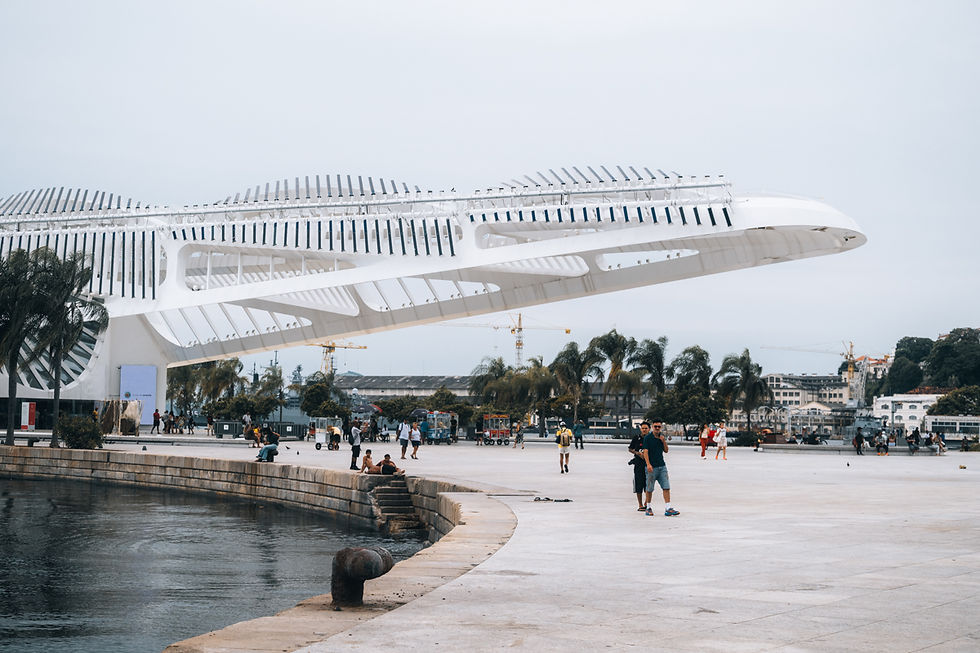
Museu do Amanhã
A striking, futuristic structure extending over the bay like a question about the future. Inside, it focuses less on artifacts and more on ideas—climate, humanity, and what comes next.
OLD RIO — CHURCHES & EMPIRE TRAIL
Mosteiro de São Bento
Founded in the 1600s, this Benedictine monastery is one of the most visually ornate interiors in Brazil—gold leaf, carved wood, and a sense of deep, uninterrupted tradition.

Igreja de Nossa Senhora da Candelária
A monumental white-domed church with a complex history tied to both imperial Rio and more recent national tragedy. Architecturally grand, emotionally layered.

Igreja de Nossa Senhora do Carmo da Antiga Sé
Once the royal chapel of Brazil’s imperial court, this church carries the formal weight of state religion during the monarchy era.
Paço Imperial
Built in 1754 and later used by Portuguese royalty, this was once the administrative heart of colonial Brazil. Today it’s a cultural space, but the architecture still feels anchored in authority and decision-making.

Palácio Tiradentes
Former seat of Brazil’s national congress, designed in neoclassical style to project republican power. It’s a reminder of how architecture was once used to express political identity.
Pão de Açúcar (Sugarloaf Mountain)
The perfect closing frame for the day. As the cable cars rise, the city pulls back into perspective—bay, mountains, coastline, and skyline folding into one final composition. At sunset, Rio doesn’t just look beautiful—it looks fully assembled.
Drinks and Dinner
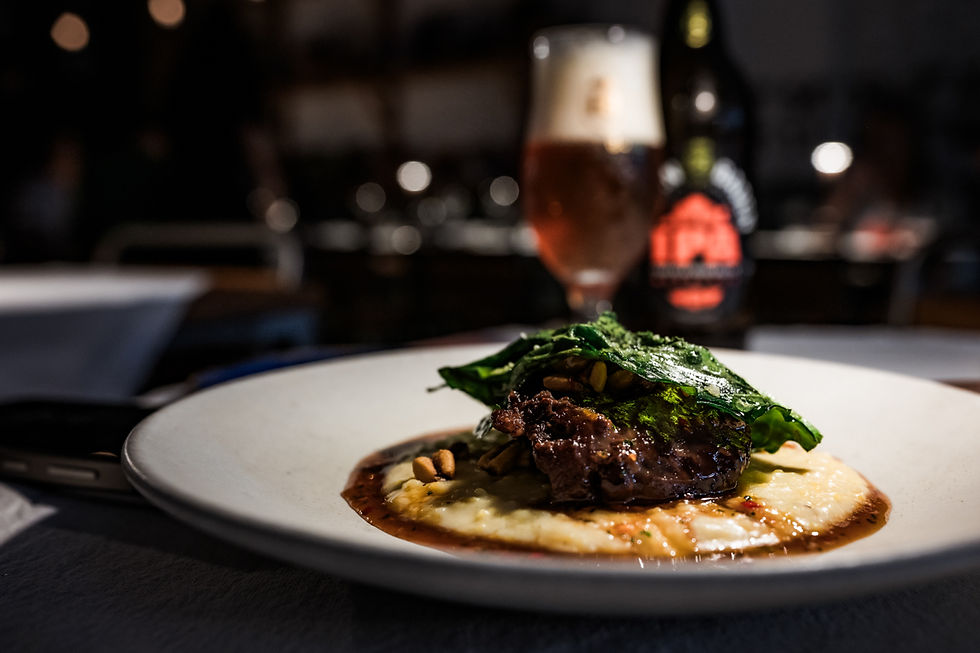
Lilia Restaurante - A modern, refined kitchen that reinterprets Brazilian ingredients with precision and restraint. It’s the kind of place where technique never overwhelms the product—just clean, confident cooking that lets Brazil’s ingredients speak in a quieter, more deliberate voice.
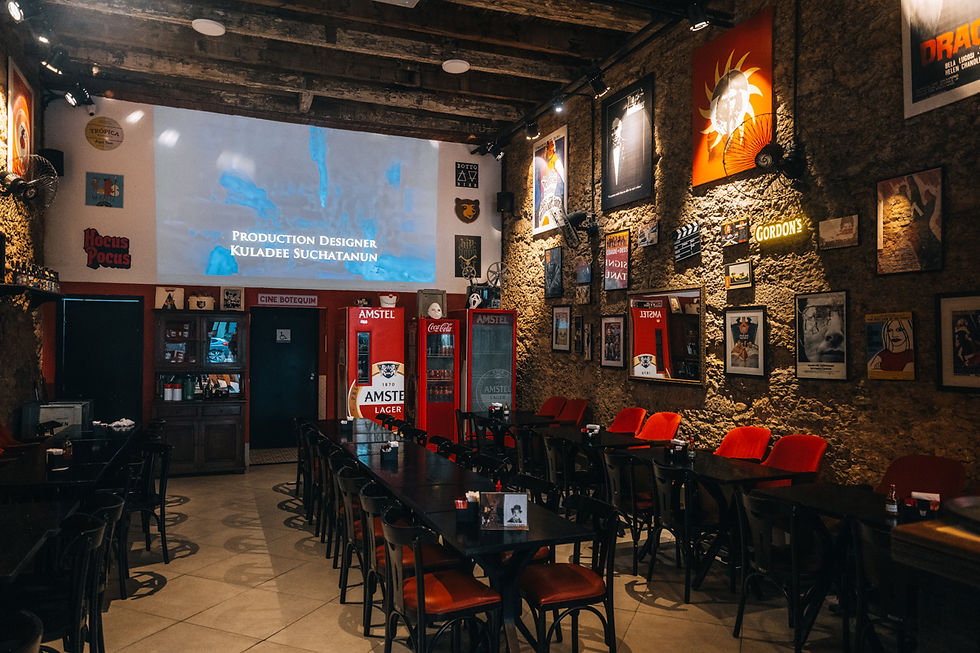
Cine Botequim - A cinematic, slightly nostalgic bar space where drinks and atmosphere feel equally curated. Good as a transition stop before or after dinner depending on pace.

Bouzas Bier - Casual, beer-forward, and relaxed—more local hangout energy than destination dining. Works well as an early stop before dinner or a low-key wind-down afterward.
Rio Scenarium (late night option) - If the night continues, this is the full immersion point: a multi-floor antique-filled samba house where live music, dancing, and theatrical chaos define the experience. It’s not subtle—but it’s unforgettable.
FINAL THOUGHTS
This is a lot—honestly, it’s probably way too much for three days, and it’s worth saying that plainly. Rio isn’t something you’re meant to optimize or “complete.” You can absolutely spend three days on the beach in Copacabana Beach or Ipanema Beach, barely moving beyond the shoreline, and still have the correct version of the trip. You might take a cable car up Pão de Açúcar, or ride up to Christ the Redeemer, and let that be your entire experience of elevation and perspective—and that’s enough.
What I did here was driven by momentum and curiosity more than necessity. I wanted to see how the city shifts from beach to hillside to port to imperial core, to understand its different personalities side by side. But Rio doesn’t require that kind of consumption. In fact, it resists it a little.
The truth is, Rio works just as well—maybe better—when you slow it down, when you choose fewer neighborhoods and let them breathe. There’s no single correct way to experience it. There’s only the version you choose, at the pace you choose. I just happen to like to walk and to see as much as I can see. Every day.
THE DETAILS
Currency: Brazilian Real (BRL)
You’ll get by almost entirely with credit cards in Rio—restaurants, hotels, beach kiosks, and most bars are increasingly cashless—but it’s still smart to carry a small amount of Reais for markets, street vendors, and the occasional old-school boteco that prefers cash. Ride shares, especially Uber, are widely used and make getting between neighborhoods simple.
When To Go:
The best time to visit Rio de Janeiro depends on how you want to experience the city—beach energy, festivals, or quieter exploration—but in general, it rewards travel year-round with a few clear seasonal rhythms.
Summer (December–March)
Pros: Peak beach season; intense, vibrant energy; long days on Copacabana and Ipanema; Carnival (Feb/Mar) transforms the entire city into a nonstop celebration of music, color, and movement.
Cons: Hot, humid, and crowded; higher prices; beaches and attractions at their busiest, especially around holidays and Carnival.
Autumn (April–June)
Pros: One of the best windows—warm but more manageable temperatures (mid-70s to low 80s°F / 24–28°C), fewer crowds, clearer light for viewpoints like Dona Marta and Christ the Redeemer, and a slower, more livable rhythm across the city.
Cons: Ocean is slightly cooler, though still very swimmable for most travelers.
Winter (July–September)
Pros: Mild and comfortable (low to mid-70s°F / 21–24°C), lower tourist volume, great for exploring neighborhoods like Santa Teresa, Lapa, and Botafogo without the heat; consistently good conditions for hiking and viewpoints.
Cons: Less “beach heat” energy—more city-focused than classic sun-and-sand days.
Spring (September–November)
Pros: A strong shoulder season—warming temperatures, fewer crowds, and a nice balance between beach weather and comfortable walking conditions; the city feels awake again after winter’s calm.
Cons: Occasional humidity spikes as summer approaches; weekends can get busier as locals return to the beaches.
Sweet spot: April–June and September–November—balanced weather, easier movement through the city, and enough energy in Rio to feel alive without tipping into peak-season chaos.
Where to Stay:
1. Copacabana Palace, A Belmond Hotel
The most iconic address in Rio de Janeiro—and arguably the city’s most storied hotel. Located directly on Copacabana Beach, this historic property blends old-world glamour with beachfront energy in a way few hotels in the world can match. Since opening in 1923, it has hosted royalty, film stars, and world leaders, all drawn to its white-columned façade and timeless elegance. Rooms are classic and refined, service is impeccable and stepping outside places you directly onto one of the most famous stretches of sand on earth.
2. Emiliano Rio (Ipanema/Copacabana border)
A sleek, contemporary luxury option positioned perfectly between Ipanema Beach and Copacabana. This is where design-forward minimalism meets ocean views—clean lines, natural light, and an emphasis on calm sophistication. The rooftop infinity pool overlooking the Atlantic is the standout, offering one of the best sunrise or sunset vantage points in the city. It’s ideal for travelers who want modern comfort without sacrificing location or atmosphere.
3. Santa Teresa Hotel RJ – MGallery
A boutique escape set in the hillside neighborhood of Santa Teresa, this hotel feels more like a private estate than a city property. Surrounded by cobblestone streets, jungle greenery, and sweeping views over Rio, it trades beachfront polish for creative, bohemian luxury. Interiors are warm and artisanal, with strong ties to Brazilian design and craftsmanship. It’s the best choice for travelers who want Rio’s slower, more atmospheric side—where mornings feel quiet, and evenings drift into candlelit terraces overlooking the city below.
GETTING AROUND RIO DE JANEIRO
Rio doesn’t move like a grid—it moves like a coastline wrapped around mountains. Distances can look short on a map and still take 30 minutes in reality, so the key is mixing transport modes based on mood, time of day, and how much walking you’re willing to do.
1. Uber & Ride Apps – The Easiest Way
Uber is the backbone of getting around Rio for most travelers. It’s reliable, affordable, and far easier than navigating street taxis. Works seamlessly across neighborhoods like Copacabana, Ipanema, Botafogo, Santa Teresa, and Cosme Velho Ideal for linking major clusters (beaches → hills → Lapa) without logistical friction. Much safer and more predictable than street taxis for visitors. Especially useful at night or after beach time when you’re sandy, tired, or heading uphill.
Bottom line: You’ll use Uber constantly—it’s the default connector between Rio’s “zones.”
2. Metro (MetrôRio) – Fast, Clean, Underrated
Rio’s subway is small but extremely efficient, especially for coastal travel. Covers key corridors like Copacabana, Ipanema, Botafogo, and Downtown. Air-conditioned, safe, and generally very reliable. Great for skipping surface traffic along the beachfront neighborhoods. Easy reload card system: RioCard works across metro, buses, and some ferries. Stations are well-marked and straightforward, making it one of the easiest metros in South America for visitors.
3. Buses – Cheap but Situational
Buses fill in the gaps the metro doesn’t reach, but they’re more of an “if needed” option. Useful for reaching hillside neighborhoods or specific routes without Uber. Can be confusing without local navigation apps. Payment is cashless via RioCard in most cases. Best avoided during peak heat or if you’re on a tight schedule. Rule of thumb: use them only when you know exactly where you’re going or want a more local experience.
4. Walking – The Real Way to Experience Rio
Walking is where Rio actually reveals itself—but it’s highly neighborhood-dependent. Excellent along Copacabana, Ipanema, and Leblon beachfront promenades. Essential in Santa Teresa, Cosme Velho, and Lapa where streets are layered with detail. Not ideal for long cross-neighborhood distances due to hills and heat. Important reality: Rio is walkable in zones, not as a whole city.
5. Scenic & Specialty Transport
A few experiences are transport as much as they are attractions:
Trem do Corcovado – The iconic train up to Christ the Redeemer, winding through dense Atlantic Forest.
Santa Teresa tram (Bonde) – Slow, nostalgic, and atmospheric, connecting hillside streets above Lapa.
Cable car to Sugarloaf – One of the most dramatic urban ascents in the world.
6. Taxis & Late-Night Travel
Still available, but increasingly secondary to Uber. Useful if Uber surge pricing spikes or connectivity is poor. Often preferred at hotel stands or major tourist zones. Less predictable than app-based rides.
QUICK TRAVEL TIPS FOR RIO
Plan in clusters, not lines. Don’t try to “cross the city” repeatedly. Pair beaches together, then hills together, then nightlife zones like Lapa in one arc. Expect hills everywhere outside the beach strip. Cosme Velho, Santa Teresa, and even parts of Botafogo are more vertical than they look. Traffic is real—build margin time. Short distances can double in time during rush hour or rain. Beach + Uber rhythm is the default.
Most days naturally become: walk the beach → Uber to hills → Uber to dinner → walk nightlife zone.
Apps matter, but intuition matters more. Google Maps works for navigation now, but real-time decisions—like when to walk vs. Uber—matter more than perfect routing.
Rio is not difficult to get around—it’s just layered. Once you stop thinking in straight lines and start thinking in neighborhoods and moods, it becomes surprisingly fluid.


Comments